

Peptide Blends: When Combined Formulations Make Sense
When a laboratory study depends on interactions among multiple compounds, manual mixing can introduce a variable before testing even begins. Peptide blends give researchers a fixed-ratio formulation that can simplify preparation, support repeatability, and make complex experimental designs easier to document.
Browse peptide blends for controlled laboratory research.
Peptide blends combine two or more research peptides in one formulation for controlled laboratory and analytical work. They make the most sense when a protocol requires a defined component ratio across repeated trials. Before procurement, researchers should review batch-specific HPLC results, the Certificate of Analysis, component identity, compatibility, storage requirements, and the controls needed to interpret each compound's contribution.
Combined formulations are not automatically better than standalone peptides. The right choice depends on the research question, experimental controls, and whether a fixed formulation improves reproducibility without limiting the study design. All materials discussed here are for research, laboratory, or analytical purposes only and are not for human consumption.
What are peptide blends in laboratory research?
In laboratory research, peptide blends are fixed-ratio formulations containing two or more defined peptide sequences in one vial. Their methodological value is reducing independent preparation steps while preserving a consistent formulation ratio across replicate experiments, provided identity, purity, and compatibility are documented.
Peptide blends are specific tools for teams in lab settings. These formulations combine two or more defined research peptides in one vial. While single peptides isolate one experimental variable at a time, peptide blends let investigators examine interactions among peptide sequences. This approach can reduce preparation steps while supporting controlled analysis of multi-component systems.
In a lab space, these blends are lab tools only. They are not for human use or health care. All research tools must stay within a safe lab setting. Using these formulations can help investigators characterize interactions among amino acid sequences under defined assay conditions. This is key for fields like biotech R&D and school science labs.
How blends help research workflows
Using a pre-mixed blend can help a lab work faster. Teams do not need to mix single peptides themselves for every test. This lowers the chance of errors during the setup phase. Since the compounds come in one vial, the lab can keep a stable space for their studies. This leads to data you can trust over many tests.
Making these blends needs a deep look at how each peptide sequence behaves. Teams must check that the peptides do not react poorly with each other in the vial. This check to see if they match is a key step before any test starts. It ensures the blend stays stable and the research results stay true. Without this step, the compounds might change before the lab can use them.
Uses in tissue and bone studies
One big area for peptide blends is tissue engineering. Teams use these tools to build fiber scaffolds that act like real body parts. For example, some blends use specific amino acid peptide sequences to help bind calcium. This is useful in research for bone growth and repair. These calcium binding traits are key for testing new lab materials.
Studies show that multi-peptide sets can work better than single-peptide ones for some tasks. They can change how an item feels or how strong it is. In bone research, these blends help labs create better models for testing. This helps team leaders see how new structures form during biomineralization. Such work is a major part of modern biotech studies.
Purity and batch consistency
For any research to count, the tools must be pure. Labs use a tool called High-Performance Liquid Chromatography (HPLC) to check this. This test ensures that every batch of lab test data meets a set standard. Teams need to know what is in their vials to trust their data. Most high-quality suppliers provide a Certificate of Analysis (COA) to show these results.
Most of these blends come as a lyophilized powder. This is a freeze-dried form that helps the peptides stay stable during shipping and storage. Teams must store these vials at the correct heat level to keep the structure safe. If the storage is poor, the peptide sequences can break down. Keeping the vials in a dark, cold place is the best way to ensure they work for the full study.
When does a combined formulation make sense?
A combined formulation makes sense when the experimental question explicitly requires concurrent exposure at a fixed component ratio. It is most defensible for repeat-heavy workflows where preparation variance matters and where standalone-component, vehicle, and blend controls can still isolate each component's contribution.
A combined mix is helpful when a study aims to test how two or more compounds act at the same time. This choice must start with a clear plan and a set goal for the lab trial. In a lab, teams use our set of research peptide blends to look at complex life paths. By using a blend, a team can make sure that each vial has the same ratio of parts. This is key for data that stays the same across many tests.
Scientists often use these mixes to see if the compounds help each other work. This is known as synergy. If a lab tests two parts alone, they may miss how the parts link up. A blend lets them see these links in a controlled way. It makes sure that the study remains precise from the first test to the last. This method is common in biotech research where exact ratios are a must.
Results of multi-peptide systems
In some cases, a mix of compounds works better than a single one. For example, research on bone tissue showed that multi-peptide blends can have better build parts than systems with only one peptide. These blends can include short amino acid peptide sequences that help with calcium binding or cell growth. By using a mix, a lab can create a more complex setting that mimics life better than a simple setup. This helps in the study of how new tissues form in a lab.
Another area of use is in the making of scaffolds. A scaffold is a base that helps cells grow in a set shape. Studies show that using peptide-based fibers in these bases can help the cells attach and grow. A blend of peptides can provide both strength and the right cues for the cells. This makes the blend a core tool for those studying how to build new parts in a lab setting.
Standardizing preparation across replicates
Using peptide research types like blends can also help a lab save time. Handling two or more single vials for each test adds more steps and more room for error. A blend removes the need to measure each part for every trial. This helps a lab focus on the data rather than the setup. It also cuts down on the amount of lab waste and lowers the risk of mistakes during the mix phase.
Common reasons to use a blend include:
- Testing for synergy between two or more known compounds.
- Ensuring a set ratio is used in every lab test.
- Reducing the time spent on making research samples for study.
- Studying how complex materials form scaffolds in tissue work.
Chemical state and batch testing
A blend only makes sense if the parts are stable together. When labs design these mixes, they must check if the peptide sequences stay pure over time. High-grade tools like checking research peptide blends through testing with HPLC are used to check this. This step makes sure that the blend does not break down or change during storage in a lab. Batch purity is vital for labs that need to repeat their work for others to see and check.
Proper storage is also a key factor for these blends. Most come as a dry powder that labs must keep in a cool, dark place. This helps the compounds stay in their best form for the study. By using a pre-made blend, the lab can rely on the work of the maker to make sure the mix is stable. This adds a layer of trust to the research data. It allows the team to move faster while keeping high standards for their work.
Peptide blends vs. single peptides
Single peptides offer maximum control over component concentration and are generally preferable for attribution studies. Peptide blends trade some flexibility for faster preparation and a standardized ratio. The correct format depends on whether the protocol prioritizes mechanistic isolation or repeatable evaluation of a defined multi-component system.
Research labs often have tight schedules and small budgets. When you use our collection of research peptide blends, you can save a lot of time. These mixes give you more than one compound in a single vial. This means you do not have to mix them yourself in the lab. It cuts down on manual work and helps you start your tests faster. It also lowers the risk of small mistakes when you move fluids from one place to new vials. By using pre-made mixes, you reduce the need to buy many vials. This saves shelf space in your cold storage unit. It also makes it easier to track your stock.
Workflow speed in the lab
Using single peptides gives you full control over how much of each part you use. But this can lead to slow workflows. A blend is ready for quick use in your study. This helps when you need to run many tests in a row. It makes the job of the expert much simpler. You can focus on the results rather than the setup. Good blends are made to stay stable during storage and use. They also help you keep your lab bench clean and neat. You spend less time on prep and more time on high-level data tasks.
| Research Factor | Single Peptides | Peptide Blends |
|---|---|---|
| Setup Time | Longer prep | Ready to use |
| Ratio Control | Full user control | Fixed ratios |
| Error Risk | Higher during mixing | Lower in the lab |
| Purity Check | Tests per part | Test for the whole mix |
| Storage Needs | Many vials | Fewer vials |
Stability and chemical fit
Not all peptides work well when you put them in the same vial. You must think about the chemical fit of each part before you mix them. Some sequences may change how others act or how they look. A pre-made blend is often checked to ensure that the parts stay stable. If the parts do not match, they might break down. This could lead to bad data or a ruined test. Some blends combine parts to study how tissues heal. When you use a blend, you must be sure the pH of the mix is right. If the pH is not right, the parts may fall out of the liquid. Expert labs check these variables before they sell a mix.
Data truth and purity checks
High purity is key for any lab task. You need to know that what you buy is what you get for your work. Good sellers use HPLC to check each batch. This is a big part of validating research peptide blends through testing. They also provide a COA to prove the purity level. Some studies show that multi-peptide systems can act in other ways than single ones in a test. Experts at third-party labs check each batch to find any stray parts. They look for salts or water that should not be there. When you cite your work, having a COA makes your paper stronger. Checked materials help you build trust in your lab data.
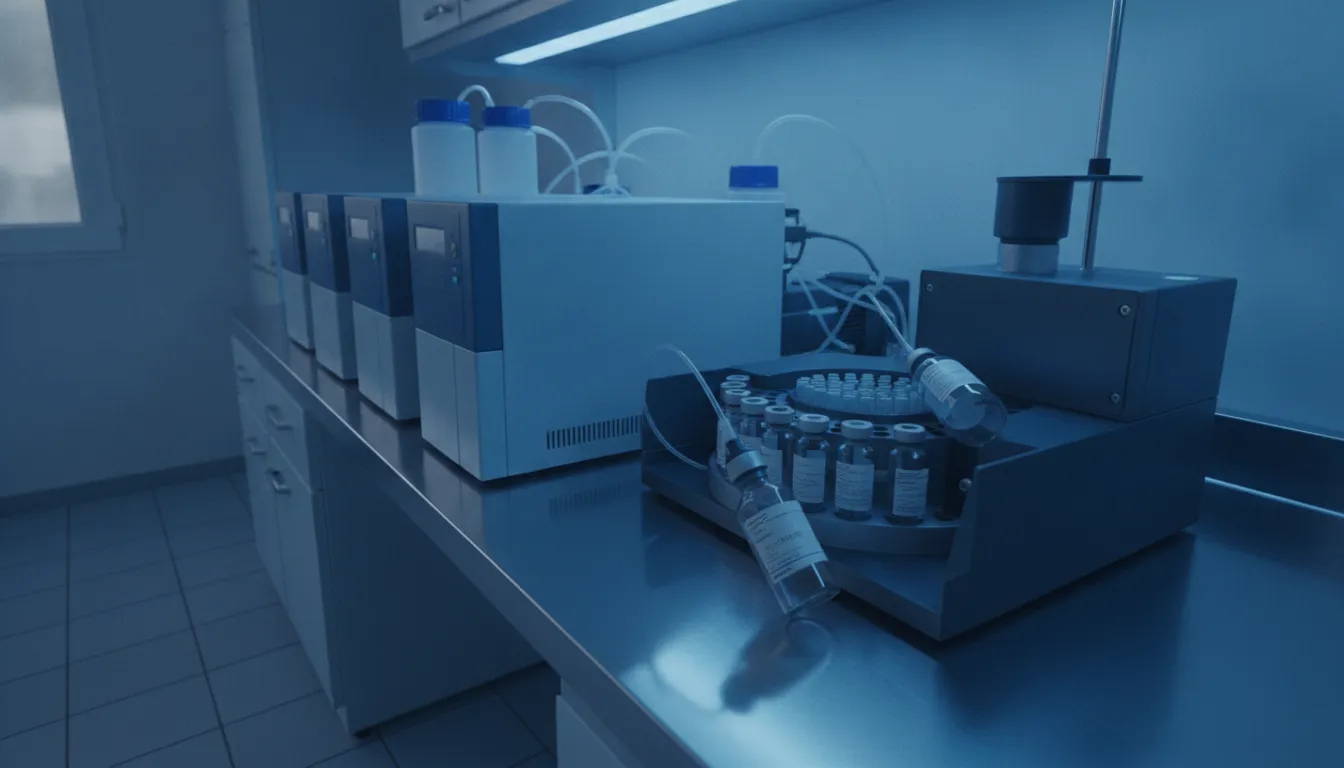
How to evaluate peptide blend quality before procurement
A procurement review should connect every peptide blend vial to batch-specific analytical evidence. Researchers should verify component identity, chromatographic purity, formulation ratio, lot traceability, storage history, and the analytical method's limitations before accepting a blend for an experimental workflow.
Rigorous procurement starts with a deep check of supplier data. To maintain research integrity, you must verify the identity and purity of every compound. This is even more vital for peptide blends, where multiple sequences must remain stable in a single vial. Relying on basic product descriptions is not enough for professional laboratory work.
Check the documentation
Every batch of research material should come with a Certificate of Analysis (COA). This document provides the chemical fingerprint of the lot. You should look for High-Performance Liquid Chromatography (HPLC) results that show a purity level of at least 99% for each part in the blend. Proper lab testing documentation confirms that the supplier uses third-party experts to check their work. This step prevents the use of bad or dirty samples in your experiments.
Verify component ratios
The value of a blend lies in the precise ratio of its parts. If the mix is off, your data will be hard to reproduce. Check the mass spectrometry (MS) data to ensure the weight matches the expected sequence of each peptide. You should also confirm that the lot numbers on the paper match the labels on the vials. Traceability allows you to link results back to the raw material data, which is a key quality standard for peptide blends.
Procurement quality checklist
- Review the HPLC report. Confirm that the peak area for each peptide shows high purity and low base-line noise.
- Analyze the MS data. Match the mass of the compounds to the known weights of the research sequences.
- Check the COA date. Ensure the testing was done recently to account for potential loss of quality during storage or transit.
- Inspect the physical vial. Look for a secure, tamper-evident seal and a lyophilized powder that appears uniform and white.
- Verify the storage rules. Confirm the supplier followed strict temperature controls for the lyophilized powder before shipping the research material to your facility.
By following these steps, you protect the accuracy of your research. Suppliers who provide clear, batch-specific data help reduce the risks of error. Choosing materials with full data transparency is the best way to ensure consistent results in any laboratory setup.
Storage and handling considerations for blended formulations
Storage and handling plans for blended formulations should be based on supplier documentation and the least stable component. Laboratories should control temperature, moisture, light exposure, container closure, handling events, and lot records because differential degradation can change the blend ratio even when total material appears unchanged.
Proper storage of lyophilized peptide powders is essential to maintain structural integrity for experimental applications. Researchers must follow strict rules to preserve the molecular stability of research peptide blends during long-term storage. Changes in heat or light exposure can lead to breakdown, which might alter the results of laboratory studies.
Preserving structural integrity
Lyophilized powder forms should be stored under right conditions to preserve sequence and molecular stability, according to Trusted Peptides quality rules. Most research labs use cold storage to slow down chemical changes that could break the peptide bonds. Keeping these compounds in a stable, cool space helps ensure that each batch remains ready for analytical testing.
Moisture is a big risk for the stability of quality standards for peptide blends. High humidity can cause the powder to clump or break down. Vials should stay tightly sealed in a dry space until they are ready for use. This step prevents air-born water from hitting the lyophilized material and preserves the integrity of the chemical sequences.
Contamination control and labeling
Maintaining a clean space is vital when handling research-grade materials. Dirty tools can introduce foreign proteins or germs that interfere with research data. Researchers should use clean methods, such as working under a flow hood, to lower risks. Trusted Peptides gives products in sterile, tamper-evident vials to support these laboratory safety rules.
Clear labels and notes are also needed for good data tracking. Each vial of validated research peptide blends should have a label that shows the batch number and date. Good records help labs track the life of their compounds. They also ensure that all materials meet purity levels before starting a new trial.
Stability of complex formulations
Combining peptides into single mixes requires careful thought about how each sequence works with others. Some amino acid peptide sequences may link in ways that change their physical traits over time. Studies show that multi-peptide mixes can work better than single-peptide systems in some tasks, such as in bone tissue engineering research. But this gain depends on how stable the blend stays.
Batch consistency is a key trust signal when buying materials for research. High-Performance Liquid Chromatography (HPLC) is the standard for verifying the purity of research peptide formulations. By checking the purity papers for each blend, researchers can confirm that handling and storage have not hurt the chemical purity of the product.
What controls strengthen peptide blend studies?
Strong peptide blend studies compare the complete formulation with each standalone component, an appropriate vehicle or matrix blank, and relevant process controls. Replicate design, predefined endpoints, stability checks, and lot-level documentation help researchers distinguish a true interaction from preparation variance, matrix effects, or differential degradation.
Researchers often face unique hurdles when they study complex mixtures. A study using a single compound is usually simple. But adding more parts can make the data hard to read. Using peptide blends in a lab requires a clear plan to avoid errors. You must use strong controls to make sure your results are real and can be done again by others.
Identify and control confounding variables
One big risk in these studies is called confounding. This happens when you cannot tell which part of the blend caused a clear change. If two parts work as one, you might not know if one or both are doing the work. This is why "giving credit" to the right part is so hard. To fix this, you should test each part on its own first. These single tests act as a base for your study. They show what each compound does without help from other parts.
Viewing a blend next to a single compound helps you see if the mix adds value. Some studies show that multi-peptide composites can work better than single systems in some cases. But you can only claim this if you have tested both in the same way. Using a "sham" or a blank control is also a vital step. A sham control uses the same process but leaves out the active parts. This makes sure that the way you handle the material does not change the outcome of your study.
Check ratio stability and matrix effects
The mix ratio in a blend can change over time. If one part breaks down faster than another, your data will be wrong. You should test the stability of the blend before you start your main work. This means checking how well the compounds stay as one in storage. Checking research peptide blends through testing is a great way to make sure your batch is steady and pure.
You must also look for matrix effects. This is when the mix of parts changes how each part behaves. One compound might hide the signal of another. Or they might stick together in a way that stops them from working well. Running a "spike" test can help you find these issues. You add a known amount of one part to the mix to see if you can still find it later. This proves your tools are reading the data right. It also shows that the blend is not hiding the facts.
Document formulations and replicate experiments
Good science needs deep records and clear notes. You should write down the batch number, the source, and the exact weight of every part. Small changes in how you mix the compounds can lead to big changes in the results. Keeping a log of every step helps other labs repeat your work later on. This builds trust in your findings. Records are more than just a list of parts; they are a map of your whole process.
Doing your tests many times is also a must for any strong study. One test might be a lucky fluke or a one-time error. Doing the same test three or more times shows that the result is steady. These repeat tests help you find the "noise" in your data. If your results vary a lot, your controls might be weak. Using high-purity materials from our collection of research peptide blends can help keep your study on track. Safe materials make it easier to get the same results every time you run a test.
When should a lab consider a custom peptide blend?
A laboratory should consider a custom peptide blend when a validated protocol requires a ratio, sequence combination, fill quantity, or documentation package that standard formulations cannot supply. Before ordering, the team should define analytical acceptance criteria, compatibility requirements, lead time, batch size, and the controls needed for interpretation.
Research labs often face study goals that one compound cannot meet. Choosing our collection of research peptide blends lets scientists test many sequences at once. These mixes make lab work easier by giving exact sets of research materials in one setup. Using a pre-mixed blend saves time on hand mixing and makes sure the mix of each compound stays the same across every trial.
A lab should consider these blends when a study needs a combined effect between two or more sequences. When researchers look at how living variables interact, they find that mixing specific materials helps them get data faster. These products are only for lab and research use. They are not for human use and must never be used to treat or prevent disease.
Defining specific study needs
Standard compounds are useful for many tests, but custom mixes support studies with very narrow goals. A lab may need a blend when a standard product does not fit their needs. This is common in studies where the way compounds work together is the main focus. Scientists must set the exact purity and ratio needed so their results are correct and easy to copy in later work.
When you design a custom mix, you must look at how well each sequence works with the others. Some sequences may not stay stable when mixed, so careful planning is needed before the study starts. Advanced studies show that multi-peptide composites can work better than single-peptide systems for some tests. Choosing the right mix helps labs keep high control over their study factors.
Supporting advanced tissue engineering models
Custom blends are vital in fields like tissue engineering and scaffold work. For example, research on bone tissue often uses amino acid sequences to help bind calcium. Researchers use specific sequences from the E-F hand domain to improve how materials bind calcium in a lab. These blends help create fiber scaffolds that mimic natural systems, which is a big part of biomaterial research.
Using these mixes allows an easy way to test how different sequences affect growth or material strength. Instead of mixing each part by hand, a lab can get a ready-to-use blend that meets their needs. This reduces the risk of errors during the setup phase of the study. Labs often use tools like electrospinning to turn these peptide-based materials into fibers for more tests.
Maintaining batch purity and data integrity
Correct data is the most important part of any lab study. To make sure the findings are reliable, labs must use materials with a clear and verified purity level. HPLC testing is the standard for validating research peptide blends through testing. This process makes sure each batch has the exact sequences and purity levels that the researcher needs for their work.
Every blend should come with a Certificate of Analysis (COA) to prove its quality. These papers show that the material is the same and free from variables that could ruin a study. Storing these lyophilized powders correctly is also needed to keep the sequences stable. By using verified blends, a lab can focus on their research goals without worrying about the quality of their materials.
Frequently Asked Questions
Why are peptides blended together?
Peptide blends help make research easier by putting several compounds into one group. This lets scientists see how different parts work together without needing many steps. According to Trusted Peptides, these mixes provide a fast way to test complex interactions. Labs use them to find if two or more peptides act better as a team than they do on their own. Using a blend saves time and keeps the test setup simple.
What is the difference between a standalone peptide and a peptide blend?
A standalone peptide has just one chain of amino acids in a vial. A peptide blend holds two or more different sequences mixed in set amounts. Using a blend ensures that the ratio of each part stays the same for every lab test. Per Trusted Peptides, these combined forms undergo HPLC testing to ensure high purity. This helps researchers get clear data while working with more than one peptide sequence at a time.
How should researchers evaluate a multi-component blend?
BPC-157 and TB-500 are often used as a pair because they may have linked roles in lab models. Scientists study BPC-157 for cell signaling while looking at TB-500 for cell movement. Mixing them lets labs see if they create a bigger effect than when used by themselves. Multi-peptide systems like this can show better results than single-peptide tests in specific studies. This blend helps researchers track how these sequences interact in real time.
Are peptide blends safe for laboratory research?
Yes, but they are only for lab or analytical use. These materials are never for human consumption. To keep data reliable, labs should only use blends that come with clear lab reports. As noted by Trusted Peptides, third-party testing is vital to prove the mix is pure. Following these steps ensures that every study stays safe and follows rules. High-quality blends allow for accurate results in many types of biotech research.
Ready to find the right peptide blends for your research needs?
Waiting to set up your next study can lead to lost time and missed goals for your research team. Every day you spend without the right tools is a day that your work stands still. Starting your work now with high-grade blends helps you stay on track and get the data you need without any delay. Choosing to act today means you can avoid the high cost of a stalled project and keep your vital lab work moving forward. Our lab-tested blends are ready for your tests today so you do not have to wait for new materials to arrive at your site. Using the right tools from the start ensures your study produces clear and useful data for your future research plans.
Ready to contact support for research supply questions? Call +1 913-325-3651 to talk to a specialist about our list of research peptide blends.
