

Selank Peptide: A Laboratory Buyer's Guide
A Selank peptide purchase should begin with the analytical package, not the product label. For laboratory buyers, the useful questions are concrete: Does the supplied material match the expected peptide? Is the reported purity supported by a batch-specific chromatogram? Can the supplier document how the sample was tested, packaged, and stored? This guide provides a research-only framework for answering those questions before material enters an experimental workflow.
Browse research peptides and review available documentation.
Research-use notice: Selank and all products discussed here are for research, laboratory, or analytical purposes only. They are not for human consumption and are not intended to diagnose, treat, cure, or prevent disease.
What Is Selank Peptide?
Selank peptide is a synthetic seven-residue peptide commonly reported with the sequence Thr-Lys-Pro-Arg-Pro-Gly-Pro (TKPRPGP). Laboratory buyers should evaluate it as a defined research compound by reviewing identity, purity, lot traceability, and handling documentation.
Selank is described in the scientific literature as an analogue related to the naturally occurring tetrapeptide tuftsin. Published laboratory and preclinical investigations have examined Selank in neurochemical, gene-expression, and immunological models. Those research contexts should not be interpreted as evidence of an approved medical use or a basis for human-use guidance.
For a procurement team, the most important implication is that Selank is a defined research compound whose identity, purity, lot traceability, and storage history can be evaluated. Researchers should align the purchased form and documentation with the planned assay before ordering.
Selank Peptide Procurement Checklist
A reliable Selank peptide procurement review confirms identity, examines batch-specific purity evidence, verifies lot traceability, and defines receiving controls before purchase. Use a consistent checklist across suppliers and lots so that attractive claims do not substitute for usable evidence.
| Review area. | What to request. | Why it matters. |
|---|---|---|
| Identity. | Sequence, molecular formula or weight, and an identity test such as mass spectrometry. | Confirms the material is consistent with the expected compound. |
| Purity. | Batch-specific HPLC result and chromatogram. | Shows how the reported purity value was generated. |
| Lot traceability. | Lot or batch number that matches the vial label and COA. | Connects the received material to its analytical record. |
| Quantity. | Clearly stated nominal fill amount and measurement basis. | Supports experimental planning and receiving checks. |
| Handling. | Supplier-defined storage, shipping, and stability guidance. | Helps protect sample integrity from receipt onward. |
| Research status. | Clear research-use-only labeling and terms. | Supports compliant procurement and laboratory controls. |
Procurement teams can improve consistency by creating a short supplier qualification record for each source. Record the documentation requested, the person who reviewed it, any unresolved discrepancies, and the acceptance decision. Repeat the review when a supplier changes its testing laboratory, documentation format, packaging, or stated specification.
Trusted Peptides emphasizes third-party HPLC testing, transparent purity documentation, COAs, and batch consistency. Buyers can review the Selank 10mg research product page and available documentation before making a selection.

How to Review a Selank Peptide COA
A useful Selank peptide COA links the received lot to batch-specific analytical results and clearly states the methods, dates, and responsible laboratory. A generic purity statement or undated example COA is not equivalent to batch-level documentation.
1. Match the identifiers
Compare the compound name, lot number, and any product code on the COA with the vial and order record. A mismatch breaks traceability. Record discrepancies during receiving and resolve them before releasing material for research.
2. Read the HPLC result in context
High-performance liquid chromatography separates components in a sample and is commonly used to estimate peptide purity. Review the stated purity result together with the chromatogram, test date, and method details when provided. A prominent main peak can support a purity claim, but HPLC purity alone does not establish peptide identity, fill quantity, sterility, or suitability for a specific experiment.
3. Look for an identity test
Mass spectrometry is commonly used to assess whether measured mass is consistent with the expected peptide. When identity data are included, compare the expected and observed values and note the reported test method. Identity and purity answer different questions, so neither should automatically stand in for the other.
4. Check dates and laboratory attribution
A useful COA identifies when testing occurred and who performed it. Third-party testing can add independence, but buyers should still examine whether the report clearly refers to the supplied lot. Save the COA with receiving and experiment records so future teams can reconstruct which lot was used.
A reviewer should also document what is absent. If a COA reports chromatographic purity without an identity result, record that limitation rather than assuming the main peak is Selank. If the analytical method, test date, or lot number is missing, request clarification before approving the material. This creates an auditable decision trail and helps the laboratory compare evidence across repeat purchases.
Purity Is Important, but It Is Not the Whole Specification
Chromatographic purity is one qualification measure, not a complete specification. Experimental risk can also arise from identity errors, degradation, inconsistent fills, packaging problems, or storage excursions.
Before approving a Selank peptide supplier, define an acceptance specification appropriate to the research. That specification may include:
- Expected sequence and molecular characteristics.
- Minimum acceptable chromatographic purity.
- Required identity evidence.
- Nominal amount and acceptable variance.
- Appearance and packaging checks.
- Storage and shipment conditions.
- Lot-specific documentation retention.
The right acceptance criteria depend on the analytical method and experimental objective. A screening assay, method-development exercise, and highly sensitive quantitative workflow may require different levels of qualification.
Acceptance criteria should be written before the lot is reviewed whenever possible. Predefined criteria reduce the risk of accepting incomplete documentation simply because material has already arrived. They also help procurement, receiving, and research teams apply the same standard. When an exception is necessary, record who approved it, why it was accepted, and whether additional qualification work is required.
Contact Trusted Peptides with research supply and documentation questions.
Receiving, Storage, and Handling Controls
Receiving controls preserve the connection between the tested lot and the material used in an experiment. A strong supplier record does not replace controlled handling inside the receiving laboratory.
At receipt
- Inspect the shipping package and vial for visible damage or compromised seals.
- Confirm the received item, quantity, lot number, and COA against the purchase record.
- Document the receipt date and any relevant transit condition noted by the supplier.
- Move the material into the supplier-specified storage condition promptly.
During storage
Follow the storage instructions supplied for the specific form and lot. Keep the container clearly labeled, restrict access according to laboratory policy, and record any excursion. Avoid assumptions based on a different peptide or formulation. Where aliquoting is part of an approved laboratory protocol, document the new container identifiers and preserve traceability to the original lot.
During experimental handling
Use the laboratory's validated procedures for sample preparation, contamination control, and instrument compatibility. The chosen solvent system, concentration range, and vessel can influence experimental performance, so those parameters should be selected and documented by qualified researchers based on the study design. This article intentionally does not provide reconstitution, dilution, dosing, or administration instructions.
A simple chain-of-custody log can strengthen the record. It can identify when a vial entered storage, who accessed it, which derived samples were created, and which experiment consumed each portion. If a result later appears inconsistent, that record helps the team distinguish a material question from an instrument, method, or handling issue.
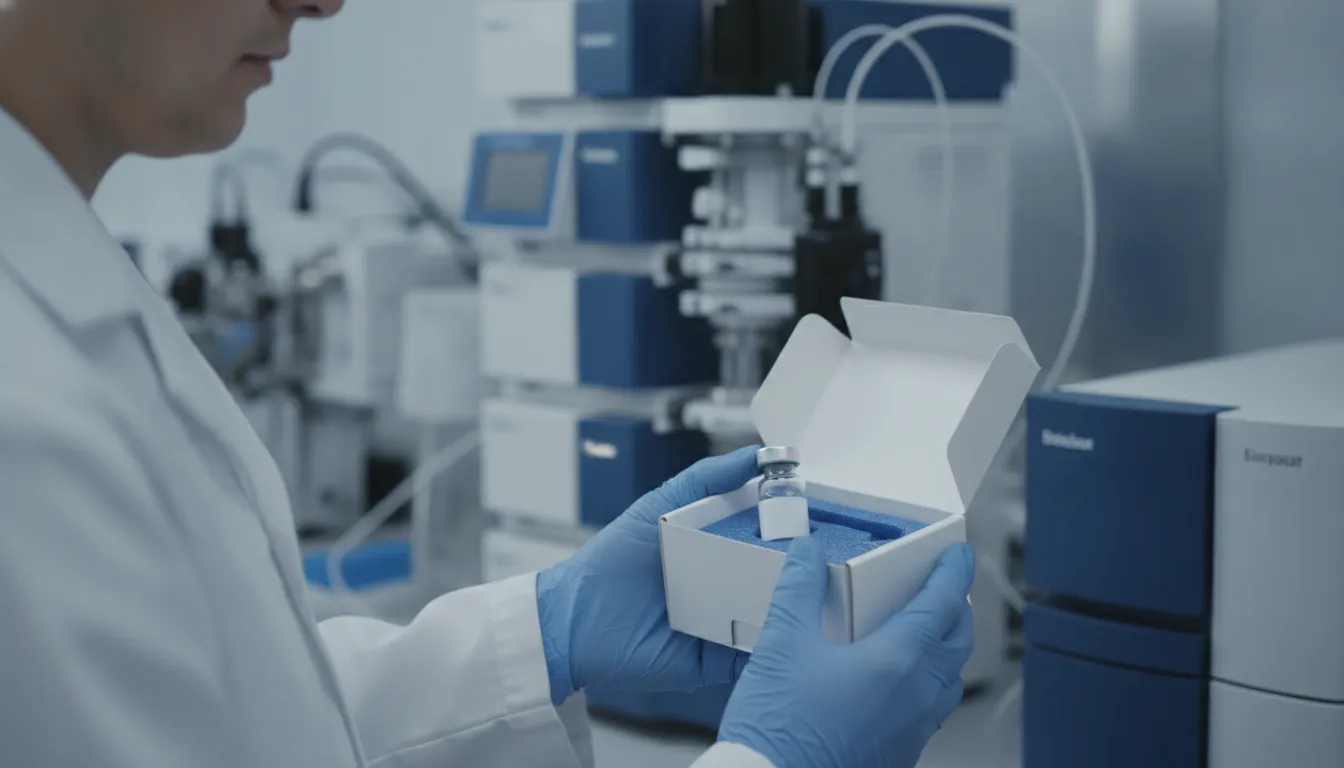
How to Compare Selank Peptide Suppliers
Compare suppliers by the completeness of their evidence, consistency between lots, and ability to support traceable procurement. Low-friction access to current documentation can save more laboratory time than a marginal difference in headline specifications.
Ask these questions before ordering
- Can I review a lot-specific COA? Confirm the report includes identifiers that can be matched to the received vial.
- Is HPLC documentation available? Request the result and chromatogram rather than relying only on a product-page claim.
- How is identity assessed? Determine whether an orthogonal method such as mass spectrometry is reported.
- How are lots and custom formulations documented? Laboratories need consistent naming and traceability when purchasing repeat or custom material.
- What shipping and support commitments are stated? Reliable fulfillment and responsive answers reduce procurement uncertainty.
Trusted Peptides supplies lab-grade research peptides and related compounds with a focus on third-party HPLC testing, COA transparency, batch consistency, and custom formulations. U.S. orders over $150 qualify for free shipping. Pricing is account-gated, so laboratories can review research nasal spray formulations or contact support with supply questions.
Designing Reproducible Selank Research
Reproducible Selank research requires teams to record the exact material input, its evidence package, and its handling history. Record the supplier, catalog identifier, lot number, stated purity, analytical documentation, date received, storage history, and material form in the study record. When a new lot arrives, treat it as a new material input and evaluate whether bridging or qualification work is appropriate for the assay.
Researchers should also distinguish what a study measures from what a paper suggests. Peer-reviewed investigations have examined Selank in specific experimental and preclinical settings, including changes in gene expression and interactions observed in animal models. These findings are context-dependent. They do not establish broad performance across assays and should not be translated into claims about human outcomes.
For primary scientific context, consult peer-reviewed sources such as the published gene-expression study available through PubMed Central. Review the model, methods, controls, and limitations before using any finding to inform a laboratory hypothesis.
Lot changes deserve explicit attention. A new lot may meet the same headline purity specification while differing in minor components, storage history, or documentation detail. Qualified researchers should decide whether the assay requires a bridging comparison and record that rationale. This is especially important when a study extends across several purchase cycles or multiple laboratory locations.
Frequently Asked Questions
What is Selank peptide used for in research?
Selank has been investigated in laboratory and preclinical models involving neurochemical, gene-expression, and immunological questions. Its relevance depends on the specific assay, model, controls, and hypothesis. Research findings do not establish an approved medical use.
What should a Selank peptide COA include?
A useful COA should identify the compound and lot, report a test date, provide batch-specific purity data, and state who performed the testing. HPLC chromatograms and identity evidence help buyers assess the analytical basis of the report.
Does a high HPLC purity result confirm peptide identity?
No. HPLC purity describes the chromatographic composition observed under a test method. An identity method, commonly mass spectrometry, addresses a different question. Buyers should evaluate both where their research specification requires them.
How should laboratories store Selank peptide?
Follow the supplier's instructions for the specific material form and lot. Document receipt, storage conditions, transfers, and excursions. Do not assume that instructions for a different peptide or formulation apply.
Can Selank peptide be used for human consumption?
No. Selank products supplied by Trusted Peptides are for research, laboratory, or analytical purposes only, not for human consumption. They are not intended to diagnose, treat, cure, or prevent disease.
Qualify the Documentation Before the Material
A laboratory buyer does not need to accept a Selank peptide listing at face value. Match the lot to its COA, examine the HPLC evidence, look for identity testing, define acceptance criteria, and preserve traceability from receipt through the final experiment. That process turns procurement from a product search into a documented quality decision.
