

Third Party Tested Peptides: COA Checklist
One missing lot number can separate useful HPLC evidence from an unverifiable purity claim. Researchers should inspect the report itself, not accept a testing badge as proof.
Browse Trusted Peptides research peptides with COA documentation
Third party tested peptides are research compounds evaluated by an independent laboratory, commonly with HPLC, to document purity and detectable impurities. Before ordering, researchers should match the COA to the product, lot number, test date, laboratory, chromatogram, and method details instead of relying on a generic purity badge.
The key question is not whether a supplier says it tests, but whether its documents let your lab verify that claim before purchase. The next section, What are third party tested peptides?, defines the standard and explains why independent analysis matters. The path begins with:
What are third party tested peptides?
Third party tested peptides are peptide research materials reviewed by an outside analytical lab rather than only by the supplier. The strongest evidence names the laboratory, shows the method used, and ties the reported result to the exact batch available for purchase.
Third party tested peptides are research compounds evaluated by a laboratory that is separate from the supplier. The outside lab tests a specific sample and reports its findings. For procurement teams, this creates evidence that can be reviewed before a compound enters a research workflow.
Independent verification
Independence matters because the testing lab does not make or sell the peptide it evaluates. Its role is to measure the submitted sample and document the results. This separation helps researchers distinguish analytical evidence from a supplier's own quality statement.
In-house testing can still support quality control, but an unsupported claim gives a buyer little to assess. A claim such as "tested for purity" does not name the method, sample, batch, or result. Third-party testing becomes useful when the report clearly connects those details.
Researchers can use supplier testing practices as one part of supplier review. They should still check whether the report matches the lot offered for sale. A lab name alone does not show that every available batch was tested.
HPLC and mass spectrometry
High-performance liquid chromatography, or HPLC, separates components in a sample so the lab can assess its purity profile. It can reveal a broad range of impurities, including chain cleavages and amino acid substitutions. A published review of peptide liquid chromatography explains why separation methods are central to peptide quality control.
Mass spectrometry serves a different purpose. It measures mass-related signals that can support a check of the compound's molecular identity. When both methods appear on a report, each should have its own result and a clear link to the tested sample.
Neither method should be reduced to a badge or a purity number without context. The report should state the method used, show the data, and identify the lab. It should also let a researcher connect the tested vial or sample to a defined supplier batch.
Evidence tied to the batch
A useful third-party report is batch-specific and traceable. Procurement teams should compare its identifying details with the product label and ordering record. They should also review whether the Certificate of Analysis, or COA, presents actual findings rather than a general quality promise.
- Supplier and independent laboratory names.
- Batch, lot, or sample identifier.
- Test method and reported result.
- Test date and supporting analytical output.
These details make the difference between a test claim and evidence that can support a research decision. Trusted Peptides provides batch-level COA records for review. All such compounds remain for research, laboratory, or analytical purposes only, not for human consumption.
How HPLC testing supports peptide purity verification
HPLC testing supports peptide purity verification by separating the target peptide from detectable related material in a sample. Researchers should review the chromatogram, peak-area calculation, method notes, and batch identifier before treating a purity percentage as useful procurement evidence.
What HPLC can show
High-performance liquid chromatography helps a lab assess the chemical profile of a peptide sample. The method separates sample components so the analyst can see the target peptide and other detected material. Research on peptide quality control explains why reversed-phase liquid chromatography is widely used for this work. It is also vital to check whether impurities coelute with the target peptide, as described in this peer-reviewed chromatography study.
A chromatogram plots the detector response as compounds leave the column. The main peak should represent the target peptide under the stated test method. Smaller peaks may point to related material, synthesis byproducts, or degradation products. Peak-area percentage can estimate chromatographic purity, but that value only makes sense within the method used.
HPLC can detect impurities with a broad range of properties, including chain cleavages and amino acid substitutions. Some similar compounds, such as certain isomers, can be harder to separate. More advanced liquid chromatography methods may help address those cases. For this reason, an HPLC result is useful evidence, not a complete identity check by itself.
Chromatogram and method details
Before ordering third party tested peptides, ask for the full chromatogram rather than a purity figure alone. A useful report should name the sample, test date, laboratory, method, and reported result. The trace should be clear enough to review the main peak and nearby peaks. Trusted Peptides also explains its approach to HPLC-tested peptide procurement guidance within its supplier review guidance.
- Confirm that the report names the peptide and tested batch.
- Check that the chromatogram is present and readable.
- Review how the report calculates the stated peak-area percentage.
- Look for the column, solvent system, detector, and run conditions.
- Note any unexplained peaks, exclusions, or limits in the method.
Method details matter because a weak separation can hide material beneath the main peak. A high reported peak area does not prove that every possible impurity was detected. It also does not confirm molecular identity on its own. Lab buyers should read the result beside any other identity data supplied on the COA.
Connection to the supplied batch
The strongest report links its result to the exact lot offered for sale. Match the peptide name, lot number, sample label, and report date across the chromatogram and COA. A generic example report cannot verify the vial a lab will receive. Batch-level records also help research teams track material changes during repeat studies.
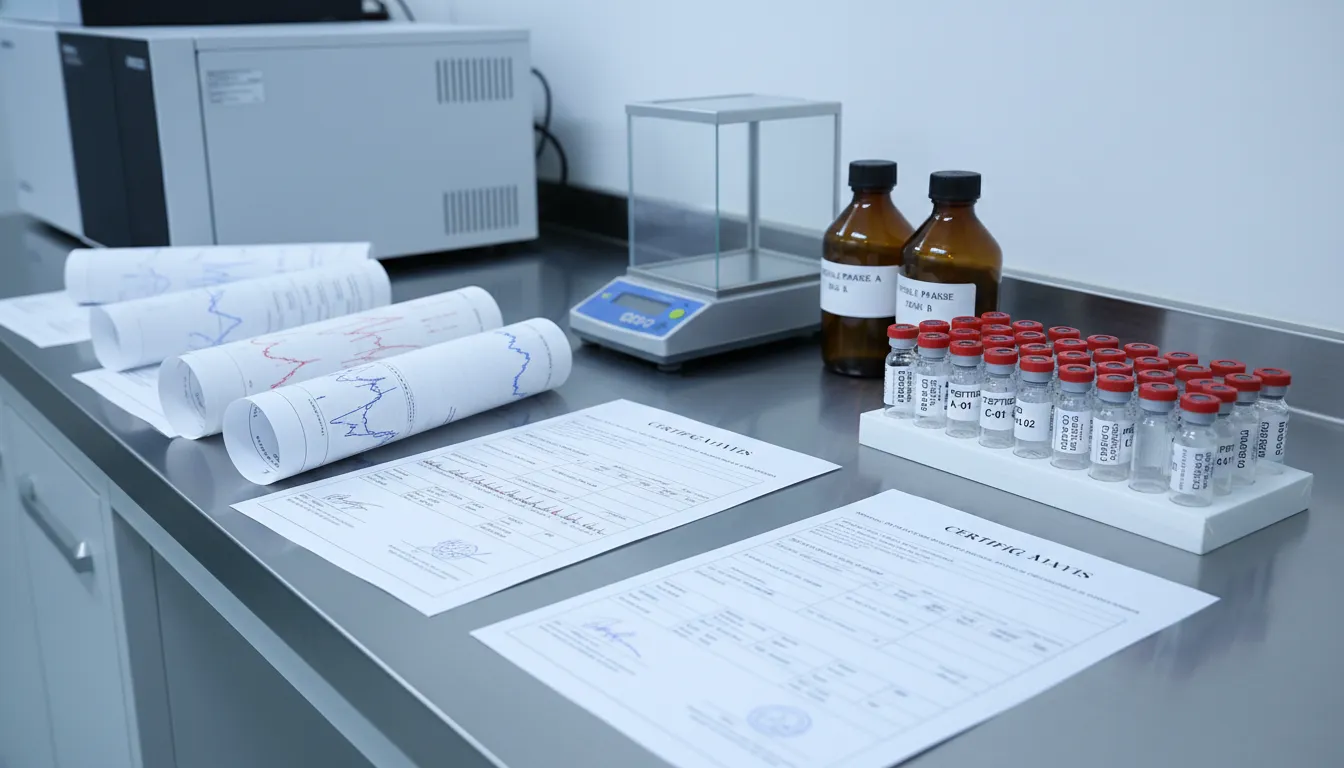
Independent testing adds value when the testing lab is named and the records are easy to verify. Buyers can review Trusted Peptides' COA review example before placing an order. The practical question is not whether a supplier displays an HPLC percentage. It is whether the evidence is clear, method-specific, and tied to the supplied batch.
What should researchers verify on a peptide COA?
Researchers should verify that a peptide COA identifies the product, lot, sequence or molecular weight when applicable, purity result, test method, laboratory, test date, and reviewer or approval field. Any mismatch between the COA and offered batch should pause procurement review.
A peptide COA should let procurement staff connect the tested sample to the material offered for research. Review the document before ordering, then save the matching record with receiving and study files. For third party tested peptides, a supplier-wide purity claim cannot replace a COA tied to the exact lot.
Product and batch identity
Start with fields that establish what the lab tested and which batch the supplier offers. Sequence and molecular weight can add useful identity checks when they apply to the compound. Use this review as a repeatable procurement process, not a quick scan for a high purity figure.
- Match the product identity. Confirm that the peptide name on the COA matches the listing and purchase request. Note any salt form, blend, or other stated formulation.
- Confirm the lot or batch number. Compare the COA number with the exact batch offered for sale. Ask for clarification when the listing and document do not map cleanly.
- Review sequence and molecular weight. Where applicable, compare these fields with the expected peptide profile. Missing or conflicting identity details should pause the procurement review.
- Read the purity result. Record the reported purity percentage, but do not treat that figure as enough proof by itself. The result needs a named test method and supporting analytical record.
- Check the test method. Look for HPLC or another clearly named method, along with readable results. A vague statement such as "lab tested" does not explain how purity was assessed.
- Verify the laboratory and test date. The COA should name the testing lab and show when the sample was tested. These fields help teams judge whether the record applies to the offered material.
- Look for review details. Check for a signature, approval field, or named reviewer. Save the final COA with the order record so later teams can trace the tested batch.
Purity result and test method
Purity percentage should be read beside the method that produced it. Quality control for peptide materials commonly relies on reversed-phase liquid chromatography. The method can detect a broad range of impurities, including amino acid substitutions and chain cleavages, as this peptide analysis study explains.
A chromatogram or related analytical output gives reviewers more context than a purity number alone. Teams can also compare supplier practices through this guide to research peptide collection. The key question stays simple: does the method and result describe the exact batch being purchased?
Lab provenance and document control
Independent lab identity matters because it shows who produced the result. Verify the lab name, test date, signature, and any report or sample identifier. Then compare those fields with the supplier's product page, lot label, and available peptide blend catalog.
Treat unclear mapping as a procurement issue. Request the batch-specific COA before ordering if the document shows another lot, omits the lot, or uses only a generic product name. This record-based approach supports consistent review across repeat orders and keeps research materials tied to their analytical evidence.
Third-party testing vs in-house testing
Third-party testing adds an independent laboratory to the evidence file, while in-house testing reflects the supplier's own quality-control process. Both can be useful, but procurement teams should compare method transparency, batch traceability, document access, and potential conflicts of interest.
Both testing models can support quality control, but they answer different procurement questions. In-house testing shows what a supplier found using its own staff, equipment, and methods. Third-party testing adds an outside laboratory to the review, which can reduce direct conflicts of interest.
Independent evidence and conflicts
A supplier controls its internal process and decides what results to publish. That does not make the data invalid, but procurement teams must assess the supplier's methods and incentives together. An outside report separates the seller from the analyst, giving reviewers another evidence source.
Even third-party tested peptides require close review. An outside laboratory name alone does not prove that the report matches the vial or batch being ordered. Researchers should check whether the laboratory, test date, method, and sample identifier are clear. Published research on peptide quality control explains why liquid chromatography is central to impurity review.
Side-by-side procurement review
Use the same evidence standard for both testing models. The comparison below shows where each model can help and what procurement teams still need to verify.
| Review point | Independent third-party testing | In-house supplier testing |
|---|---|---|
| Conflict of interest. | Analyst is separate from seller. | Supplier controls testing and sales. |
| Transparency. | Lab identity should be visible. | Internal methods should be disclosed. |
| Documentation. | External report supports the COA. | Supplier report supports the COA. |
| Batch traceability. | Report must match the batch. | Internal record must match the batch. |
| Procurement confidence. | Adds an outside evidence source. | Depends more on supplier controls. |
Internal testing may be useful for process control, especially when the supplier shares full methods and raw results. For purchasing decisions, an external report adds confidence only when it is complete, current, and tied to the supplied batch. Review the available COA documentation examples before comparing research materials.
Documentation and batch traceability
The strongest file set creates a traceable chain from the ordered item to the analytical report. The COA should identify the compound and batch. Supporting material should also state the test method and reporting laboratory. Batch-specific COAs matter because broad purity claims cannot show whether the tested sample matches the material under review.
For repeat procurement, teams can retain each COA and compare results across lots. This record helps them spot missing data, unexplained changes, or reports reused across unrelated batches. A guide to independent testing documentation offers more criteria for supplier review. Testing labels are useful only when the records behind them can be checked.
Supplier signals that matter before ordering research peptides
A supplier review should test the strength of its records, not the polish of its product pages. Lab buyers need evidence tied to the exact material offered. They also need clear terms for storage, shipping, support, and research-only use.
Batch-level analytical records
Start by asking whether a certificate of analysis is easy to access before ordering. The COA should identify the tested batch and show the related analytical results. A general purity claim cannot show whether the available vial matches a prior test.
Review the method behind each reported result. Research on peptide quality control explains how liquid chromatography can detect impurities such as substitutions and chain cleavages. This makes liquid chromatography analysis useful when checking synthetic peptide quality.
Third party tested peptides should come with records that connect the outside lab, sample, test date, and batch. Buyers can also review this guide to independent testing documentation when comparing suppliers. Trusted Peptides states that it uses third-party HPLC testing by MZ Biolabs.
- Ask for a batch-specific COA, not a sample report.
- Check that the batch number matches the product being supplied.
- Look for the test method, reported purity, and outside laboratory name.
- Ask how the supplier handles a failed or unclear result.
Operational fit for the study
- Confirm whether the same batch can support planned repeat work.
- Ask whether custom formulations are available for a defined research need.
- Confirm lead times for standard items and custom work.
- Document who handles COA, shipment, and technical support questions.
Research-only compliance and commercial terms
Supplier language should clearly limit products to research, laboratory, or analytical purposes. It should not promote human consumption or give self-use directions. Clear limits help procurement teams keep product records aligned with the intended lab setting.
Commercial terms also need review before a lab commits to an order. Trusted Peptides keeps pricing behind account access, so qualified buyers should create an account to view it. Labs should compare total order requirements, shipping terms, and support access without assuming a public list price.
Custom work requires a more detailed discussion. The buyer should define the requested formulation, documentation needs, expected volume, and target schedule. Labs can contact support for research supply questions before relying on a supplier for a planned study.
How storage and handling affect research material integrity
Supplier instructions set the baseline
Third party tested peptides arrive with analytical evidence for a specific batch, but that evidence reflects the material when it was tested. Storage and handling after receipt can affect whether the material remains fit for the planned research. Labs should treat supplier documentation as the main source for storage limits, handling controls, and shelf-life guidance.
Review the label, batch-specific COA, and any handling sheet before placing material into inventory. The stated conditions may differ by peptide, formulation, packaging, or intended analytical use. If instructions are unclear, pause intake and ask the supplier for written guidance rather than applying a general rule.
Controls for lyophilized research material
Lyophilized powder is dry, but its physical form does not remove the need for controlled handling. Keep the original container sealed when possible, limit exposure to moisture and light, and avoid needless temperature changes. Staff should also prevent cross-contamination by using clean work areas and material-specific procedures.
A practical receiving check should record package condition, label details, batch number, and any observed temperature excursion. Compare those records with the supplier's stated cold chain expectations where they apply. This creates a clear trail if later analytical results differ from the original COA documentation examples.
- Confirm that the container seal and label are intact.
- Place the material under the stated storage conditions without delay.
- Record transfers, excursions, and unusual observations in the inventory log.
- Quarantine material when its handling history does not meet the documented limits.
Integrity checks across the material lifecycle
Good storage records support a stronger review of unexpected findings. They help a lab separate a possible handling issue from a supplier, batch, or test-method question. This matters because liquid chromatography can detect related substances and degradation products, as described in a peer-reviewed HPLC methods study.
Testing and handling records should work together. Before use, confirm that the batch identifier matches the COA and that the documented storage history meets supplier instructions. Labs comparing vendors can also review whether suppliers offer third-party HPLC testing plus clear handling documentation for each batch.
Do not assume that an intact package proves continued integrity after an excursion. Follow the supplier's written process for review, testing, or disposal of questioned material. These controls keep decisions tied to records and analytical evidence, not appearance alone.
Where Trusted Peptides fits in a research procurement workflow
Trusted Peptides serves laboratories that need research-grade peptides backed by clear quality records. Its role begins before an order, when procurement teams compare supplier controls, documentation, and fulfillment options.
Initial supplier review
A sound review starts with the supplier's testing process and access to batch records. Trusted Peptides uses third-party HPLC testing by MZ Biolabs and provides COA documentation for review. These records help teams assess purity data before adding a supplier to an approved vendor list.
HPLC is useful because peptide quality control often relies on reversed-phase liquid chromatography. The method can also reveal impurities with different properties, including substitutions and chain cleavages. Researchers can review the published analysis of peptide quality control for more detail on these methods.
Procurement teams should still check whether each record matches the exact compound and batch under review. Trusted Peptides' guide to third-party HPLC testing offers more context for comparing supplier practices.
Batch documentation and continuity
After the first review, the focus shifts from broad quality claims to batch-level proof. A COA should be tied to the supplied lot, not presented as a general example. This link gives the research team a record for its files and supports later review.
Batch consistency also matters when a study needs repeat orders over time. Procurement staff can compare new COAs with prior records and flag changes before materials enter the workflow. This approach supports data integrity without treating any test result as a blanket guarantee.
Supplier review should cover the records that matter to the planned work:
- Batch-specific COA access and test-lab identification.
- Clear compound name, lot reference, and reported purity data.
- Consistent documentation across repeat orders.
- Research-only labeling and handling expectations.
Teams that need a deeper supplier-vetting framework can also review the discussion of verifiable supplier documentation and batch-specific COAs.
Ordering and ongoing supply
Once approved, Trusted Peptides can support routine orders and inquiries about custom formulations. Account creation provides access to pricing, so procurement teams can evaluate costs within the proper account process. No public price should replace an account-based quote or current order details.
Shipping is available within the United States and Canada, where appropriate. Before ordering, teams should confirm the destination, required timeline, product format, and needed records. For repeat supply, retain each COA and link it to the matching lot in the lab's system.
All products remain for research, laboratory, or analytical purposes only. They are not for human consumption and are not intended to diagnose, treat, cure, or prevent disease.
Browse research peptide listings with batch documentation
Create a Trusted Peptides account to review research peptide availability
Frequently Asked Questions
How do you verify the quality of third-party tested peptides?
Match the lot number on the vial to a batch-specific COA from an independent laboratory. Confirm the report names the tested compound, testing date, laboratory, method, and reported result. Review the chromatogram rather than relying on a supplier badge. The published chromatography research also explains why methods must separate impurities from the target peptide.
What should a Certificate of Analysis for research peptides include?
A useful COA should identify the peptide, supplier batch or lot, sample identifier, testing laboratory, analysis date, method, and results. For HPLC, it should include the reported purity and supporting chromatogram. Researchers should also confirm that the document applies to the exact batch being ordered. A generic report or unmatched lot number does not establish batch-specific quality.
Does third-party testing guarantee 99% peptide purity?
No. Third-party testing describes who performed the analysis, not the result the sample achieved. Researchers should inspect the batch-specific HPLC report and chromatogram for the actual reported purity. They should also check whether the method separated likely impurities from the target peptide. A claim of 99% purity without traceable analytical data is not independently verifiable.
How often should research peptide vendors perform third-party testing?
Third-party testing should be performed for each production batch offered for research use. Batch-specific testing lets a laboratory match the received vial to the relevant analytical result. It also supports comparisons across orders and helps identify changes in batch consistency. Testing one sample and applying that result to later, untested batches does not provide equivalent evidence.
Are third-party tested peptides safe for human consumption?
No. Third-party HPLC testing can provide evidence about a sample's purity profile, but it does not make a research peptide suitable for human consumption. HPLC alone also does not establish sterility, endotoxin status, or clinical safety. Research-only peptides are intended for laboratory or analytical purposes only and are not intended to diagnose, treat, cure, or prevent disease.
Ready to verify your research peptide supplier?
Ordering before reviewing batch-specific records can waste procurement time and leave your laboratory resolving avoidable questions about material identity, purity, and consistency. Delaying that review may push approval decisions closer to planned study dates, when missing documentation becomes harder to resolve without affecting research schedules. Starting now gives your team time to compare HPLC results, match every COA to its batch, and record a repeatable supplier review process.
Ready to review available research materials with greater clarity and prepare for your next procurement decision? Create an account to view research peptide pricing and documentation, then contact support with questions before placing your next research-only order. Use the available records to keep your review focused on documented quality evidence.
