

Peptide Storage Guide for Research Laboratories
Poor storage of research items can quickly ruin high-purity compounds and hurt expensive lab data. Protecting the chemical structure of your peptides needs strict control over heat, light, and moisture. These lab standards ensure your results stay correct and steady.
Good peptide storage needs keeping lyophilized powders in airtight, dry containers at temperatures of -20C or lower for long-term stability. While dry peptides stay stable at room temperature for a few days during shipping, researchers should move them to a deep freezer right away. Standard lab rules suggest that lyophilized peptides stay stable for several years when kept under these dry, cold conditions. Once a researcher dissolves a compound into a liquid, the shelf-life gets shorter. The item should stay in a fridge between 2C and 8C instead of a freezer. Keeping a dark space is also vital, as light can break down sensitive chains and hurt purity. Following these strict rules protects the compounds and ensures that research data stays steady across every part of a lab study.
Building a good storage plan starts with knowing how heat and light affect each peptide form. Researchers must see the line between dry powders and liquid solutions to keep purity levels high. Knowing that peptide storage starts with the material state is vital. The path begins with the material state.
Peptide storage starts with the material state
Researchers must know the state of their supplies before setting a storage plan. Peptides come as dry powders or liquid solutions. Each form has its own needs and risks. Choosing the right method helps keep your supplies stable for your work. This is the first step in high-quality peptide storage for any lab. Using proper peptide reconstitution procedures is the next step after you secure your dry samples in the freezer.
Stability of lyophilized powders
Dry or lyophilized powders are the best form for long-term use. These powders stay stable for many months when you keep them cold. Most labs store these vials at -20C or lower to stop any changes. This cold state keeps the chemical bonds safe from breaking down too fast. Using a dry freezer helps prevent moisture from getting into the vial. If you need to store them for years, some labs go as low as -80C. This deep freeze is the best way to stop all chemical activity.
Light and heat can hurt even the best dry samples. You should keep your vials in a dark place and away from bright lights. While these powders can sit at room temperature for a few days, it is not best for long stays. Lab teams often use airtight boxes to add another layer of safety. This helps ensure that the materials meet lab-grade peptide purity standards during later tests.
Handling reconstituted liquid solutions
Once you add a liquid to the powder, the shelf life drops. Liquid solutions are much more sensitive to the world around them. You should keep most liquid mixes in the fridge at 2C to 8C. Unlike dry powder, you should not freeze most liquid solutions. Freezing and thawing can hurt the structure of the peptide chain. It is also wise to check the pH of your mix. Keeping a pH of 5 to 6 can help keep the solution stable for a longer time.
Liquid samples only last for about 30 to 90 days. The exact time depends on the specific sequence of the material. Researchers should only mix the amount they need for their current work. This helps avoid waste and keeps the data clean. Always use a clean workspace to stop any growth from hurting your liquid mix. According to research in biologic stability, these compounds are highly prone to breaking down if the setting is not controlled.
| Feature | Lyophilized Powder | Reconstituted Solution |
|---|---|---|
| Best Temperature | -20C to -80C | 2C to 8C |
| Shelf Life | Several years | 30 to 90 days |
| Handling Risk | Low (until opened) | High (growth risk) |
| Light Sensitivity | Moderate | Very High |
| Freeze/Thaw Impact | Minor if kept dry | High structural damage |
How should laboratories control storage temperature?
Cold control is key for peptide storage in a lab. Most compounds ship as dry powders. This form stays stable longer. To get the best results, keep these powders at -20°C or colder. Pure peptides are fragile. Heat causes fast damage. You must use the right tools to track cold levels in your workspace.
Managing long term lyophilized storage
For long-term use, the best way is to store dry peptides at -20°C. Some labs use deep freezers that reach -80°C for even better care. Storing items at these low levels helps stop chemical changes. These changes could ruin your test data. While dry powders stay good for weeks at room temperature, cold storage is best for long-term use. It ensures they last for many months. You should always read the notes for each batch. Some types are more prone to damage.
Light and moisture also affect how well a peptide stays. It is best to store vials in a dark place. This avoids damage from bright light. Before you open a cold vial, let it reach room temperature first. This simple step stops moisture in the air from turning into water inside the tube. Wet air can cause fast peptide damage. This leads to poor results in your lab tests.
Handling cold chain receipt and excursions
The storage process starts the moment a shipment arrives. You should check the cooling packs to make sure the items stayed cold during the trip. If the shipment feels warm, it is a heat shift. These shifts can put the health of the compound at risk. This is a big problem for fragile research items. If the heat goes too high, the peptide may not work well in your next study.
To lower these risks, move your new items to the freezer at once. Keep a clear log of storage times and batch numbers. This helps you track each vial. Following high lab-grade peptide purity standards requires a clear plan. You need this plan from the time you get the box until you use it. Good care at this stage protects your work. It helps you get the right data for your research.
Temperature rules for reconstituted solutions
Mixing a peptide with a liquid changes how you must store it. Once in a liquid form, the compound is much less stable. It is not as strong as when it was dry. You should not freeze these liquids. The act of freezing and thawing can snap the peptide chain. Instead, keep the vials in a fridge between 2°C and 8°C. Most research-grade peptides will stay stable for 30 to 90 days in the cold.
If you must store a liquid for a long time, try to split it into small parts. This way, you only take out what you need for one test. This method limits how much the rest of the sample has contact with heat. Following proper peptide reconstitution steps is a vital way to keep your tools good. You should always aim to use liquid peptides soon. This gives you the best data from your work.
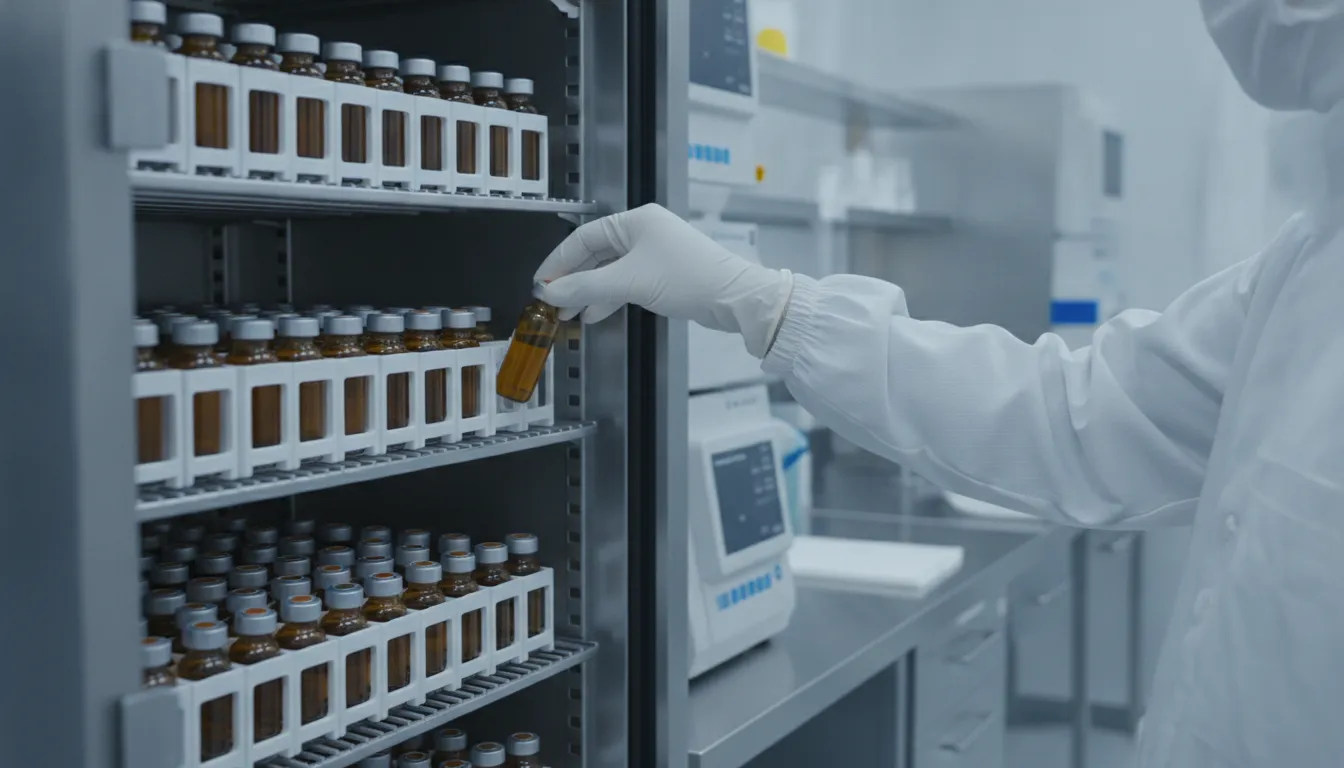
Protect peptides from light, moisture, and oxygen
Peptides are fragile compounds that react quickly to their setting. Small changes in light or air can damage the pure state of your sample. These surrounding factors often cause the peptide to decay fast and ruin your lab results. It is vital to keep your research items safe from light, air, and damp conditions at all times.
Guard against light and oxidation
Bright light can hurt the molecular shape of a peptide in any form. You should store your vials in dark places or use tinted glass to block out the sun. Oxygen in the air also starts a process called oxidation that affects specific amino acids. To stop this risk, you can fill the vials with an inert gas like argon before you seal them. This creates a safe shield around the lyophilized powder that prevents the air from reacting with sensitive parts of the peptide chain.
Control moisture with desiccation
Wet air is a major risk for dry peptides because they pull in water from the room. This can cause the sample to clump up or start to break down before you use it. To prevent this, you should keep your vials in a desiccation jar with a drying agent. These jars use silica gel or other beads to pull moisture away from your vials. This step helps ensure your proper peptide reconstitution procedures lead to clear results in the lab.
Best practices for container handling
Every time you open a vial, you let in fresh air and dampness that can harm the batch. You should only open the jar when you are ready to start your work with the sample. If you have a large supply, divide it into smaller parts first to avoid exposing the whole lot. This practice, known as making aliquots, helps you use what you need without risking the rest of the batch. Keep the caps tight and check the seals often to make sure the fit stays firm and safe.
Manage air exposure and condensation
When you take a vial out of cold storage, you must let it reach room temperature first. If you open a cold vial, water from the air will turn into liquid inside the jar. This process is called condensation and can lead to moisture damage. This extra water can damage the peptide and change its weight. Always wait at least thirty minutes before you open any container from the freezer. This simple wait time is a key part of good lab work for lab-grade peptide purity standards.
Build a repeatable peptide receiving and storage workflow
A set lab SOP for receiving new compounds helps you maintain a clear chain of custody. Since peptides are weak to their area, even small slips during intake can cause chemical degradation. This risk makes it vital to move materials from the shipping box to a controlled freezer as fast as you can. A clear workflow ensures that every vial is logged, checked, and stored at the right temperature without delay.
Receiving and initial inspection
When a new shipment arrives, start by checking the outer box for any signs of damage or leaks. Verify that the contents match your packing slip and that the order is complete. You should also check the lab reports (COA) for each batch to confirm it meets your lab-grade peptide purity standards. This early check prevents you from storing faulty materials that could ruin your future research data.
The move from a shipping box to peptide storage units is a key step in the workflow. You must limit the time the vials spend at room temperature. While most dry powders are stable for a few days in the mail, heat or bright light can harm the peptide chain. Preparing your labels and logs before you open the box will help you work faster and keep the compounds safe.
- Inspect the packaging: Check the shipment for damage or heat spikes during transit. Make sure all vials are sealed and no labels are missing.
- Review the COA: Match the batch number on the vial to the purity documents. Confirm the sequence and mass are correct for your study.
- Label the vials: Add a date of receipt and an internal tracking number to each container. This helps you track the shelf life of the material over time.
- Move to the freezer: Place the dry vials in a moisture-free box at -20°C or lower. Keeping the vials away from bright light is also key for best storage.
- Update the lab log: Record the storage spot, batch number, and date in your logbook. This step ensures you always know exactly what is in your stock.
Tracking and stock control
Keeping a strict stock log helps you track how long each vial has been in the freezer. This is helpful for managing sequences where storage stability is a known technical challenge. A good log also tracks the number of times a vial has been warmed to room temperature. Since moisture can hurt the powder, you should only open a vial after it reaches room temperature to avoid condensation.
Using a clear labeling system makes it easier to find what you need. This keeps you from leaving the freezer door open for too long. You should also link your storage logs to your proper peptide reconstitution procedures. This lets you see the full history of a compound. You can track it from the day it arrived to when it was used in a test.
Review how third-party testing and COAs support research peptide procurement before a new batch enters storage.
What should a peptide storage record include?
Good records are the heart of clear research. When you work with fragile tools, you must track every detail of how they are kept. A full record for peptide storage helps you prove that your data is sound. It also helps you find why a test might have failed. By keeping a clear log, you ensure that your lab work stays high in quality.
Core batch and source data
Each record must start with the facts that name the sample. You should list the peptide name, the lot number, and the date it arrived. This data links your current work back to the source of the product. You must also link the record to the purity data for that batch. Keeping a copy of the lab-grade peptide purity standards or the COA is a key step. This ensures that you know well what is in the vial.
You should also track where the vial is kept in your lab. Note the room number, the freezer, and even the box or shelf. This helps lab staff find the sample fast. If you do not have a clear spot for each vial, you might leave the freezer door open too long. This lets in heat and damp air that can harm the product. A good log makes the work quick and safe for the sample.
Environment and cold logs
Peptides are very weak against the world around them. Heat, light, and air can all cause the chains of amino acids to break down. To stop this, you must log the cold of your storage spot every day. Most lyophilized peptides stay stable at -20 degrees Celsius or lower for long-term use. If your log shows a steady cold level, you can trust that your sample has not gone bad over time.
Sometimes things go wrong, like a power fail or a broken seal. You must log these slips as "excursions." Note the date, how high the temp rose, and how long it stayed there. This data is vital when you look at your final research results. If a test is off, you can check the log to see if a warm spell ruined the peptide. You should also note if the vials are kept in a dark box. This protects them from light damage that can change how they work.
Handling and aliquot details
Each time a vial is moved or opened, you should write it down. A "chain of custody" log shows who had the sample and what they did with it. This creates a clear trail of use for each batch. You should also log when you divide a large batch into smaller parts. These small parts are called aliquots. Aliquot logs help you avoid the harm caused by taking a vial in and out of the cold too often.
When you make these smaller tubes, note the date and the amount in each one. You should also list what kind of tube you used. Research shows that low-adsorption plastic tubes are the best choice to keep your samples safe. If you use the wrong tubes, the peptide might stick to the walls. This would leave you with less stuff than you thought. A clear log of these steps keeps your research exact and easy to repeat.
How can labs reduce avoidable handling risks?
Handling errors are a top cause of data loss in peptide research. When lab staff use poor methods, the compounds may break down before the study ends. This leads to results that are hard to repeat. It also wastes lab funds. To keep your research on track, you must set clear rules for how you touch and move every vial.
Use small parts to limit freeze-thaw damage
The best way to protect dry peptides is to divide them into small parts. This step ensures that you only thaw the amount needed for one day of work. Repeated freeze-thaw cycles can snap the fine bonds in a peptide chain. By using small vials, you keep the main stock safe in the freezer. This lower risk helps prevent the loss of a whole batch.
You must also watch out for moisture. If you open a cold vial in a warm room, water will form inside. This moisture can start the breakdown of the product right away. Always let your vials reach room temperature before you break the seal. This simple wait time helps keep the lab-grade peptide purity standards high for every test.
Manage stock and use cycles
Good lab habits start with how you track your stock. Dry peptides can stay stable at -20 degrees Celsius for many months. But even in a deep freeze, some amino acids may slowly change. You should use a "first-in, first-out" plan. This makes sure you use older vials before they sit for too long. Clear labels with the date and batch number are vital for this task.
Review your stock every three months to find any vials that are past their best use date. If a vial has been out of the freezer for more than a few days, mark it for quick use. You may also want to test it again to be safe. This level of care helps you avoid using weak compounds in your tests. This care ensures your effort results in useful data for your team.
Control storage vials and the workspace
The vial you choose matters as much as the freezer setting. Many labs use cheap plastic tubes, but these can cause trouble. Peptides often stick to the walls of standard tubes. This sticking reduces the amount of compound you can actually use in your study. Research shows that low-adsorption plastic tubes are the best choice to prevent this type of loss.
You should also store your vials in the dark. Light can cause a slow breakdown of certain peptide sequences. Use dark boxes or a shelf in the back of the freezer. Keep the air inside the box dry by using small packets of desiccant. These steps keep the lab air from hurting your research materials. By fixing these small risks in your workspace, you can ensure that your research stays sound and strong.
Supplier documentation supports storage decisions
The success of lab work depends on the stability of the items used. Safe peptide storage starts with picking a source that gives clear proof of value. Experts must know exactly what is in each vial to set the right storage rules. When a source offers full data, you can make better choices about how to keep your items safe and useful for long-term use.
Checking purity with HPLC and COAs
A Certificate of Analysis (COA) is a vital tool for any lab. It shows the results of third-party HPLC testing. This test proves the purity and name of the compound. Without this data, you cannot be sure how the peptide will react to cold or light. High-purity items tend to stay stable longer than those with bad parts. You should always look for lab-grade peptide purity standards before you start your work. These files give you the base you need to track changes over time.
Labels on the vial must also match the COA. Clear labels help you track batch numbers and dates of making. This is key when you have many vials in one freezer. Knowing the date a batch was made helps you decide which ones to use first. It also tells you if a batch is getting close to the end of its life. Good labels prevent simple errors that could ruin your data. They make sure you follow the right peptide storage steps for each exact compound in your stock.
Batch sameness and chain of custody
Sameness across other batches is a sign of a top source. If each batch is the same, your storage results will be better known. This help is vital for labs that run long tests over many months. You need to know that a new vial will act like the last one. When you are buying research-grade peptides, ask about batch-to-batch testing. A good source will have a clear record of how they made and moved the goods. This chain of custody ensures the items were kept cold from the lab to your door.
Proper records also help you find the cause of a failed test. If a peptide breaks down too fast, you can check the batch data. You might find that one batch had a different moisture level. Studies show that the tubes used for peptide storage can also affect the results. For example, some tubes lead to loss of the compound. By tracking batch data alongside your own storage logs, you can spot these trends. This lets you fix issues before they ruin more samples.
Exact storage help for compounds
Not all peptides are the same. Some are much more frail to light or heat than others. A great source will give you data on the exact needs of each item. You can ask for info on the amino acid sequence if it is not on the COA. Certain residues can make a peptide less stable over time. Knowing these facts helps you decide between storing a vial at -20C or -80C. This level of detail is needed to protect your cost and your work.
Finally, do not be afraid to ask your source for more help. If the COA is hard to read, they should explain it to you. They should tell you how they shipped the items. If they used dry ice, you know the items stayed cold. If they used cold packs, you may need to check the stability data. This talk between the lab and the source builds trust. It ensures that every step of the peptide storage process is backed by real facts and science.
Frequently Asked Questions
How should dry (lyophilized) peptides be stored for long-term stability?
Dry peptides should stay in an airtight box to keep moisture out. For long-term use, labs should keep these vials in a freezer at -20 to -80 degrees Celsius. Research from Stanford University shows that most dry peptides stay stable at room temperature for two to three weeks. However, cold storage is the best way to keep the compound pure for months or years. Always use a dark box to block bright light from hitting the vials.
How long do reconstituted peptides last in the refrigerator?
Once a peptide is mixed with liquid, its shelf life is much shorter than the dry form. According to GenScript, these solutions have a very limited life. Most mixed peptides stay stable for 30 to 90 days when kept in a cold fridge. These vials should be stored between 2 and 8 degrees Celsius. This stops the structure of the chain from breaking down too fast. Lab teams should write the date of first use on the label for better tracking.
Why is it important to let a cold vial reach room temperature before opening?
Opening a cold vial in a room with any moisture in the air causes water to form inside. This moisture can quickly ruin the dry peptide powder. The vial must reach room temperature before breaking the seal. This simple step protects the purity of the compound. It also ensures that the results of laboratory work stay consistent and reliable over time. Research from Stanford confirms that this prevents condensation from forming on the cold surfaces.
What is the best way to avoid repeated freeze-thaw cycles?
Frequent changes in temperature can damage the delicate structure of a peptide. To prevent this, labs should divide the dry powder into small parts before they add any liquid. This way, researchers only thaw the exact amount they need for a single test. The rest stays safe and cold in the freezer. This method helps keep the compound pure. It also stops the loss of signal during sensitive lab tests as noted in this study.
Strengthen your laboratory peptide storage process
Reliable storage begins with qualified research materials, clear lot documentation, and a repeatable laboratory workflow. Trusted Peptides supplies lab-grade research peptides supported by third-party HPLC testing and transparent purity documentation. All products are intended strictly for research, laboratory, or analytical purposes only and are not for human consumption.
Create an account to view research peptide options or call +1 913-325-3651 with research supply questions.
