

NAD Nasal Spray Research Guide: Quality and Storage
A spray format can look simple while hiding variables that change a laboratory result. For an NAD nasal spray study, the formulation record, pump, container, storage history, and batch documentation all affect whether researchers can compare observations with confidence. This guide gives principal investigators, procurement teams, and laboratory managers a practical framework for evaluating those variables without making human-use or therapeutic claims.
Review Trusted Peptides' NAD+ research material and available quality documentation before planning your next controlled study.
NAD nasal spray is a research-only format containing nicotinamide adenine dinucleotide (NAD+) in a solution presented through a spray container. A procurement review should verify compound identity, formulation details, container specifications, batch-specific testing, and supplier storage instructions. The material is for research, laboratory, or analytical purposes only. It is not for human consumption and is not intended to diagnose, treat, cure, or prevent disease.
What is NAD nasal spray in a research setting?
In a research setting, NAD nasal spray is a delivery format used to investigate NAD+ under a defined laboratory protocol. It is not simply a compound in a different package. The solution composition, pump output, headspace, closure integrity, and handling history introduce format-specific variables that must be documented.
NAD+ as the research analyte
Nicotinamide adenine dinucleotide is a coenzyme involved in cellular redox reactions and other biochemical processes. Laboratory studies may examine NAD+ as an analyte or experimental variable. Those studies require verified identity and consistent material, not assumptions based on a product name alone. Teams seeking broader procurement context can review this guide to evaluating lab-grade NAD+ documentation.
Why the spray format needs separate controls
A spray container adds mechanical and formulation variables that are absent from lyophilized powder. Pump consistency, solution homogeneity, container compatibility, and evaporation can affect the material presented during an experiment. Before use, researchers should define how they will record the container identifier, storage condition, elapsed time after opening, and any observed change in appearance.
- Formulation: Confirm the listed components and stated concentration.
- Container closure: Record vial material, closure type, and evidence of damage.
- Delivery mechanism: Identify whether the pump is metered and how its performance is documented.
- Batch traceability: Match the physical item to its certificate of analysis (COA).
Which format specifications should procurement teams review?
Procurement teams should review the compound identity, complete formulation record, container closure, fill information, pump specifications, and batch identifiers before approving NAD nasal spray. This specification-first approach prevents a purchasing decision from relying on purity language alone.
Compound identity and formulation record
The supplier's record should clearly identify NAD+ and disclose the formulation components relevant to laboratory planning. Researchers should not infer concentration, preservatives, pH, or excipients when those details are absent. If a study requires a custom formulation, define the requested specification in writing and retain the approved version with the study file.
Container and pump documentation
Container material and closure integrity matter because the solution remains in contact with them during storage. The pump is also part of the experimental system. A metered mechanism may support repeatability, but the research team should still establish its own acceptance criteria and document lot-to-lot differences. The related research nasal spray procurement guide explains additional questions to ask across spray-format materials.
| Specification | Why it matters | Record to retain |
|---|---|---|
| Compound identity | Confirms the intended analyte | COA and product specification |
| Formulation components | Identifies potential experimental variables | Approved formulation record |
| Container closure | Supports integrity and compatibility review | Receiving inspection record |
| Pump or actuator | Introduces a mechanical variable | Supplier specification and lab check |
| Batch number | Connects material to test results | Inventory and study records |
How should laboratories receive, store, and handle NAD nasal spray?
Laboratories should inspect NAD nasal spray on receipt, quarantine it until documentation is matched, and store it according to the supplier's verified instructions and the approved study protocol. The chain of custody should show who received the item, where it was stored, and when its status changed.
Receiving and quarantine
Start with the package condition, item count, batch number, and any temperature-control evidence supplied with the shipment. Photograph damage and isolate questionable material. Do not release a batch into active inventory until the label and batch identifier match the COA and purchase record. A simple discrepancy log makes exceptions visible before they affect a study.
Storage and access control
Follow the storage condition stated for the specific supplied material. Do not substitute a generic peptide-storage rule for batch-specific instructions. Record the storage unit, monitored temperature range, access date, and any deviation. Restrict access to trained laboratory personnel and keep research-only labeling legible.
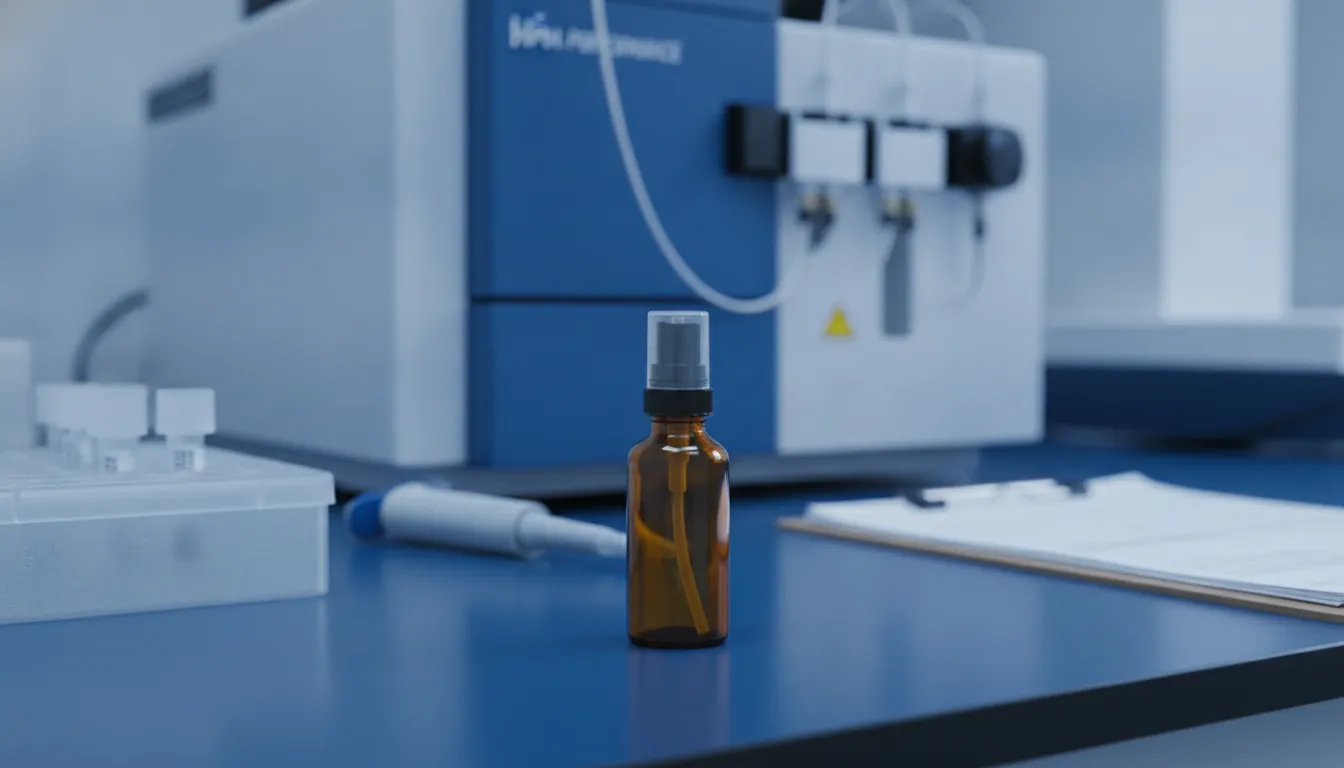
Handling records that support reproducibility
Every transfer or status change should be traceable. Record opening date, operator, material condition, and the study identifier. If a protocol includes a pump-performance check, document the method and acceptance criteria before data collection. For general cold-chain and inventory concepts, see the laboratory-focused guide to storage and handling documentation.
- Inspect the shipment and compare it with the purchase record.
- Quarantine the material while the label, batch number, and COA are matched.
- Record the verified storage location and condition.
- Release the batch only after documented acceptance.
- Track access, opening, deviations, and final disposition.
How do researchers evaluate a COA and third-party testing?
A useful COA connects a specific batch to clear identity and purity results, test methods, dates, and an accountable laboratory record. Researchers should read the evidence behind the summary result rather than treating a purity percentage as the entire quality review.
Match the COA to the physical item
Confirm that the batch or lot number on the COA matches the received material. Check the test date, report identifier, sample description, and analytical method. A report for another batch cannot establish the quality of the item in hand. If a field is unclear, resolve the discrepancy with the supplier before approving the material.
Review HPLC and identity evidence separately
High-performance liquid chromatography (HPLC) can characterize purity by separating components and reporting their relative signal under stated conditions. Identity requires its own supporting evidence, such as mass-spectrometric data where applicable. The method, chromatogram, and interpretation should be coherent. Trusted Peptides emphasizes third-party HPLC-UV-MS testing and transparent COA documentation; researchers can use this HPLC testing overview for laboratory buyers as a companion resource.
Use a repeatable COA review checklist
- Does the batch number match the label and receiving record?
- Are identity and purity addressed with appropriate methods?
- Are test dates, methods, and results visible?
- Can the team retain the report with the study file?
- Are discrepancies resolved before release?
Use the third-party testing checklist to standardize reviews across research purchases.
What should a laboratory look for in an NAD nasal spray supplier?
A qualified supplier should provide traceable batch documentation, clear research-only labeling, responsive support, and specifications that allow procurement teams to compare materials consistently. Availability alone does not answer whether a product fits an approved research protocol.
Documentation before purchase
Ask what records are available before ordering and whether batch-specific COAs can be matched after receipt. Confirm how specification changes are communicated. For a recurring program, consistency between orders matters because an undocumented change can become a hidden experimental variable.
Research-only compliance
Supplier language should clearly maintain the boundary between laboratory research and human use. Avoid sources that make treatment, dosing, or guaranteed outcome claims. Trusted Peptides supplies research materials for laboratory and analytical purposes only, with pricing available through account access. Researchers can also browse the research peptide supplier checklist for a broader vendor evaluation framework.
Operational fit
Review order traceability, shipping coverage, support access, and the ability to discuss custom research formulations where relevant. Document the supplier-selection rationale in the procurement file. This gives future reviewers a defensible explanation for why the selected material met the study's requirements.
How can teams plan reproducible research with a spray format?
Reproducible spray-format research begins by treating the material, formulation, container, pump, and handling history as controlled variables. Teams should define acceptance criteria before procurement and preserve enough information for another qualified researcher to understand what was used.
Build the specification into the protocol
List the required identity, formulation, batch documentation, storage condition, and container characteristics in the protocol or procurement specification. State how deviations will be assessed. This makes quality decisions consistent and reduces the chance that a purchasing shortcut changes the study design.
Keep batch and device variables visible
Record which batch and container were associated with each experiment. If a program spans multiple orders, review each new batch rather than assuming equivalence. Retain COAs, receiving records, pump checks, storage logs, and deviation records together so the evidence can be audited.
Separate evidence from interpretation
The supplier's COA documents analytical results for the supplied batch. The laboratory's protocol and observations address the research question. Keeping those records distinct helps prevent an analytical quality result from being misrepresented as evidence of a human or therapeutic outcome.
Prepare for study closeout
Study closeout is easier when the recordkeeping plan starts before the material arrives. Define how long the team will retain purchase records, COAs, inspection notes, storage logs, deviation records, and final disposition documents. Assign ownership for each record instead of relying on an informal shared folder.
At closeout, reconcile the remaining inventory with the usage record and note any unexplained discrepancy. Confirm that the batch identifier appears consistently across the study file. A complete record does not prove a scientific conclusion, but it helps reviewers understand the material controls behind the work and supports a more reliable assessment of reproducibility.
Frequently asked questions about NAD nasal spray research
Is NAD nasal spray intended for human consumption?
No. Trusted Peptides materials are for research, laboratory, or analytical purposes only. They are not for human consumption and are not intended to diagnose, treat, cure, or prevent disease.
What records should arrive with a research batch?
At minimum, laboratories should be able to match the material to a batch-specific COA and product specification. The receiving file should also retain the purchase record, label details, inspection outcome, and verified storage instruction.
Does a purity percentage confirm identity?
No. Purity and identity answer different questions. Researchers should review the stated analytical methods and supporting evidence for each, then confirm that the report matches the received batch.
How should a laboratory choose storage conditions?
Use the verified supplier instruction for the specific material and the approved laboratory protocol. Record the storage unit and monitored condition, and document any deviation rather than relying on a generic rule.
Why does the spray pump matter to a study?
The pump is a mechanical part of the research format. Its specifications and performance can introduce variability, so laboratories should define and record any relevant acceptance check before collecting data.
Request documentation for your next research project
Trusted Peptides supports qualified laboratory teams with research-only compounds, batch documentation, third-party testing, and custom formulation discussions. Review the available NAD+ research material or call +1 913-325-3651 with a research supply question.
For research, laboratory, or analytical purposes only. Not for human consumption. Not intended to diagnose, treat, cure, or prevent disease.
