

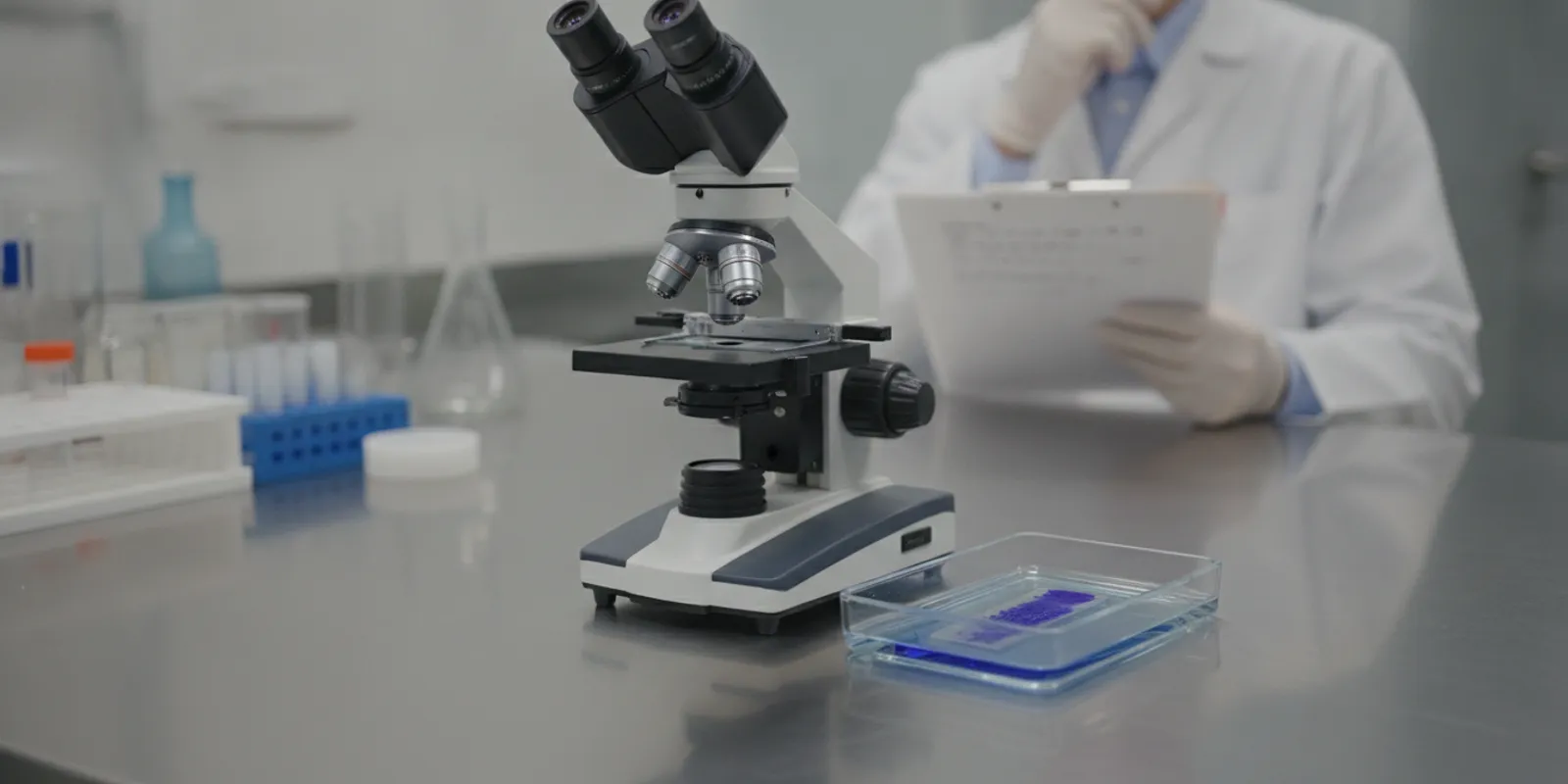
Methylene blue laboratory research applications range from staining workflows to controlled investigations of its chemical and analytical properties. For research teams, the value of a method depends on defining the question, documenting the material, and separating visible staining results from broader claims that the experiment does not test. This guide focuses on laboratory practice and interpretation boundaries, not medical or consumer use.
Contact the team about research supply questions
What questions can methylene blue laboratory research address?
Methylene blue is a colored compound used in several research and laboratory contexts. One familiar use is as a stain: a dye can make structures or organisms easier to observe under a microscope. The exact purpose depends on the specimen, preparation, staining protocol, and instrument. A result from one protocol should not be assumed to apply to a different specimen or analytical question.
Staining and visualization
Staining provides contrast. Researchers may use a staining procedure to help visualize features in prepared specimens, including microorganisms in appropriate laboratory methods. The U.S. Food and Drug Administration's Bacteriological Analytical Manual includes a methylene blue stain procedure, demonstrating a defined laboratory context for the dye. The protocol itself, not the name of the reagent alone, determines how a result is produced and interpreted. See the FDA's BAM R45 methylene blue stain procedure for a specific example.
Before adopting a stain workflow, identify the specimen type, the visual feature of interest, and the observation method. Record the preparation and staining steps, including timing and any rinse or counterstain steps specified in the approved procedure. Where a laboratory is adapting an established method, retain the original procedure and document every change. That history helps reviewers distinguish a method-driven difference from a specimen-driven result.
A useful method review begins by separating the question into observable parts. Is the team asking whether a feature can be seen, whether a procedure produces consistent images, or whether two defined workflows differ? Each aim calls for a different endpoint. A visibility question may need a defined review rubric, while a repeatability assessment also needs replicate preparations and a plan for comparing run-to-run variation. Writing down the aim first keeps a stain from being treated as a general-purpose test.
Method development and comparison
A study may compare staining conditions or assess how a prepared specimen appears under defined conditions. Such a comparison calls for a prespecified endpoint, a consistent observation process, and controls that expose sources of variation. The question might be whether two preparation workflows produce comparable visualization, or whether a revised step changes the recorded image. It should not be expanded into an unrelated claim about effects beyond the observations made in the study.
Set a comparison plan before collecting data. Keep the specimen source and preparation consistent where possible, assign coded sample identifiers, and decide how images will be captured and reviewed. If multiple observers score images, define the scoring criteria before reviewing study samples. These practices do not guarantee a particular result; they make the basis for comparing results clearer.
For example, a team evaluating a modified preparation sequence could divide comparable specimens across the planned workflows, apply the same image-acquisition settings, and record the operator and run date for each set. The team should decide in advance how it will handle a damaged slide, an image that is out of focus, or a missing record. Those cases should be flagged under documented rules, not removed after results are known simply because they complicate the comparison.
Research boundaries and interpretation
Methylene blue also appears in scientific and historical discussions beyond routine staining. Harvard Health Publishing summarizes its history and varied contexts, including its early use to stain microorganisms. The overview is useful background, but it is not a substitute for a validated procedure or a study-specific protocol. Read Harvard's overview of methylene blue as general context, and keep the experimental question anchored to what the laboratory actually measured.
For an article or report, state whether the work concerns stain performance, a chemical property, or another defined laboratory question. Do not treat a colored image as proof of a biological effect. Avoid extrapolating from a laboratory observation to clinical outcomes, diagnosis, or use in people. Clear boundaries improve scientific communication and prevent a method description from being mistaken for an unsupported conclusion.
It can help to write an interpretation statement before analysis begins. For instance: “This comparison describes the recorded image feature under the specified preparation and observation conditions.” A statement of that kind defines what the data can address without implying that the study establishes an effect outside the measured endpoint. If the results are exploratory, label them as exploratory and distinguish observations from hypotheses suggested by those observations.

How should a methylene blue workflow be planned and controlled?
A reliable workflow begins with a precise question and a written method. Researchers should determine whether they are using an established staining procedure as written or conducting a method-development comparison. Those are different study aims. In the first, the main priority is fidelity to the specified procedure. In the second, the team needs a controlled plan for changing and evaluating selected parameters.
Define the endpoint before choosing steps
Describe the intended observation in measurable terms. For example, specify whether the study will record presence or absence of a visual feature, image intensity under fixed acquisition settings, or a predefined score assigned by trained reviewers. Do not rely on a vague aim such as “see what happens.” A defined endpoint helps determine which controls, instruments, and records are needed.
Separate the reagent's role from the measurement. If the dye is used to produce contrast, the measured outcome may be an image feature rather than a property of the dye itself. State which part of the workflow is being evaluated and which parts are held constant. This makes the method easier for another laboratory member to repeat.
Translate the endpoint into a short analysis plan. Define the unit being evaluated, such as a specimen, field of view, or image, and specify how many observations belong to each sample when the approved study design calls for repeats. If image intensity is recorded, note the region-selection rule and settings that will remain fixed. If a categorical score is used, list the scoring categories and provide examples or reference images where appropriate. Clear definitions reduce the risk that reviewers apply changing standards as they work.
Use appropriate controls and comparisons
Controls should address plausible alternative explanations for the observed result. Depending on the study design, a team may include an unstained specimen, a procedural control, or a reference material handled under the same documented conditions. The right choice depends on the question and established laboratory procedures; this overview does not prescribe a universal protocol. Record why each control was included and what it can or cannot establish.
For a comparison, change one planned factor at a time when feasible, or use a design that explicitly accounts for multiple factors. Keep sample handling, observation conditions, and image acquisition consistent across groups. If a run is repeated, retain the records for all runs, including those that do not match expectations. Excluding an inconvenient result without a documented scientific reason undermines traceability.
Think through controls as answers to specific alternative explanations. An unstained comparison may help reviewers judge background appearance, while a repeated reference specimen may help indicate whether the observation process was consistent across runs. Neither automatically establishes that every other part of the method is reliable. For each control, state what result would be expected and what action follows if it is not observed. This makes control results useful in the final interpretation rather than a box checked after data collection.
Track specimen preparation and observation
Specimen preparation can affect what is visible. Log the specimen identifier, source or preparation batch where applicable, relevant handling steps, and the time points required by the protocol. For imaging, document the microscope or imaging system, objective or setting where relevant, illumination and exposure settings, and any image processing. Keep original image files and distinguish them from processed or annotated versions.
A compact run sheet helps ensure that critical information is not reconstructed from memory. Use a controlled form or electronic record with fields for operator, date, method version, reagent identifier, sample identifiers, controls, deviations, instrument settings, observations, and file locations. If a method changes, identify the revised version and effective date rather than overwriting the previous record.
Make the record useful at the bench. Put the method identifier and current revision where the operator can verify them, then provide a clear place to enter each sample's identifier and disposition. Use consistent units and labels in all worksheets. If a field does not apply, mark it according to the laboratory's recordkeeping convention rather than leaving a blank that could mean either “not applicable” or “forgotten.” Before closing a run, compare the sample list against the image and observation files so that every planned sample has an accounted-for record.
Plan for method variation
Variation can enter through reagents, specimens, timing, equipment, operators, and image interpretation. Decide in advance which factors need monitoring and how the team will handle a deviation. A deviation record should say what differed, why it occurred if known, which samples or runs were affected, and whether the team repeated or excluded any measurement. Preserve enough detail for another qualified researcher to understand the decision.
When a project uses coded samples or multiple reviewers, retain the key and the review procedure in a controlled location. Use consistent file naming and keep a simple mapping from sample identifier to raw image and analysis record. These organizational steps are practical safeguards for reproducibility, not evidence that the study has validated a biological or clinical claim.
Consider a scenario in which an imaging system is unavailable and an alternate instrument is used for one run. The record should identify the instrument change, explain which samples were observed on it, and note whether settings can be matched or whether the data require separate treatment. A reviewer can then judge whether the records support a combined comparison or whether results should be reported separately. The important point is not to pretend that the deviation had no effect; it is to make the decision auditable.
Compare common laboratory approaches
The structured comparison below contrasts broad workflow choices. It is a planning aid, not a substitute for a laboratory's validated procedure, safety requirements, or instrument instructions.
Established stain procedure
Primary purpose: Apply a defined staining workflow to an appropriate specimen.
Useful controls or records: Method version, reagent identity, specimen ID, process control, timing, and observation record.
Interpretation boundary: Interpret only the features the procedure and observation can support.
Staining method comparison
Primary purpose: Compare planned procedural conditions or preparation choices.
Useful controls or records: Prespecified endpoint, matched samples where feasible, consistent imaging, and deviation log.
Interpretation boundary: A difference between conditions does not by itself explain its cause.
Analytical characterization
Primary purpose: Evaluate a defined chemical or material attribute using a fit-for-purpose method.
Useful controls or records: Instrument method, reference or calibration records, raw data, and acceptance criteria.
Interpretation boundary: Do not infer identity, purity, or performance from color alone.
Image review study
Primary purpose: Assess image features using a defined and repeatable review process.
Useful controls or records: Acquisition settings, blinded or coded review when appropriate, scoring rubric, and original files.
Interpretation boundary: Scores describe the selected endpoint and do not establish outcomes beyond it.
Use the comparison to choose the right record set, not to rank one approach as universally better. A routine application of an established stain may need evidence of procedural fidelity, while a method comparison needs a plan for isolating the factor under evaluation. Analytical characterization, in turn, depends on a method capable of measuring the selected material attribute. If a project combines these approaches, separate their objectives and records so the conclusion for one cannot be mistaken for evidence about another.
Which analytical and procurement records support reproducibility?
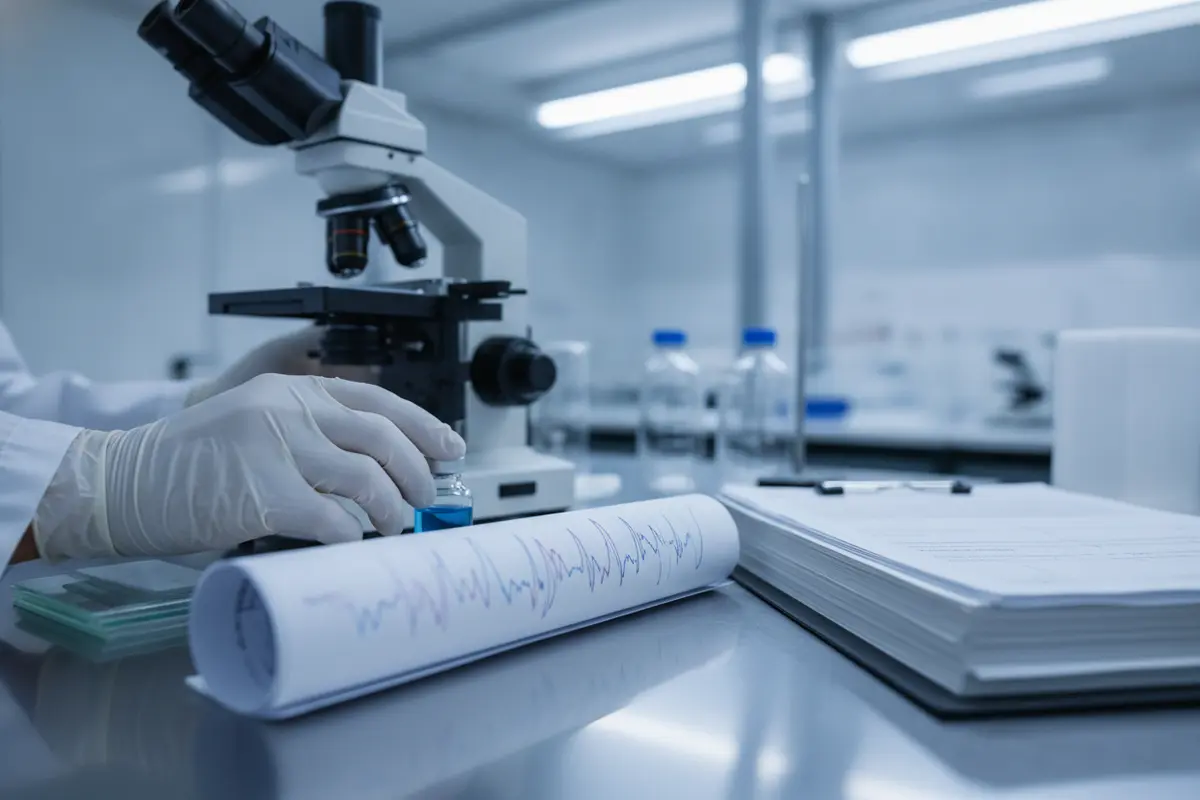
Reproducibility depends on more than a reagent label. For a methylene blue project, the record should connect the material used to the method, sample, instrument output, and interpretation. Procurement decisions should therefore consider the documentation available for the material and its intended laboratory application. Verify that the product description and supporting records match the study's requirements before work begins.
Confirm material identity and documentation
Record the name used by the supplier, lot or batch identifier, receipt date, container condition, and any accompanying specification or certificate. If the work requires a particular grade or specification, define that requirement in the study plan and assess the documentation against it. Keep the supplier record and the laboratory's incoming review together so that the material history can be traced later.
Where a certificate of analysis is provided, review what it actually reports. Note the method, batch association, reported result, and any stated limits. A document should not be treated as proof of an attribute it does not measure. For example, a visual description alone does not establish a quantitative purity value. If a method requires a specific analytical check, confirm that the documentation covers that check or arrange an appropriate assessment through the laboratory's established quality process.
A simple receipt review can follow a repeatable sequence: match the received item to the purchase record, check the container and label against the accompanying documents, note the lot identifier, and identify any missing information that matters to the study. Route discrepancies through the laboratory's normal purchasing or quality process before the material is assigned to a study. Retain the resolution, including any supplier clarification, with the receipt record. This creates a traceable link between what was requested, what arrived, and what the team ultimately used.
Keep analytical methods fit for the question
Analytical characterization is distinct from staining. Select an analytical method based on the property being assessed and the study's requirements. Capture the method version, instrument configuration, reference materials or calibration records, acceptance criteria, raw data, and review decision. If a result falls outside a planned criterion, document the investigation and disposition. Avoid presenting a single characterization result as a guarantee of performance in every experimental context.
For image-based work, maintain the original files and record processing steps. Cropping, contrast adjustments, thresholding, or color changes may affect how an image appears, so the analysis workflow should be transparent and repeatable. If quantitative image analysis is used, preserve the software or procedure version, parameters, and any manual decisions. Reports should distinguish raw observations from transformations and interpretations.
Choose acceptance criteria before inspecting results wherever the study design permits. Record how the team selected the criterion and what it applies to; a threshold written after viewing all outcomes can make interpretation difficult to evaluate. Keep a distinction between a measurement outside a criterion, a technical invalidation under a predefined rule, and a result that is merely unexpected. They are not interchangeable dispositions and should have different documentation.
Build a traceable batch and study file
A practical study file can link the material receipt record to the run sheet, sample map, images, analytical outputs, and final report. Assign stable identifiers and use those identifiers consistently in filenames and tables. Keep amendments dated, attributable, and linked to the original entry. Where multiple people handle samples or review results, document responsibilities according to the laboratory's quality system.
Before a run, use a short readiness review: Are the question and endpoint stated? Is the approved method available? Are material and specimen identifiers traceable? Are controls defined? Are instrument settings and file locations known? After the run, check that observations, deviations, and raw data are present. A brief completeness review can catch missing records while details are still accessible.
One workable folder structure separates the approved protocol, procurement records, raw observations, processed outputs, and report drafts while preserving a single identifier across them. A sample map can connect a coded sample to its preparation record and image filename without placing interpretation in the filename itself. When a file is replaced or corrected, preserve the original under the applicable record policy and document the reason for the change. These conventions help a second reviewer retrace the path from sample to reported result without relying on an author's memory.
Use supplier links as record destinations, not endorsements
Research teams can review a supplier's COA library and quality information as part of their own due diligence. Use the research catalog to identify available materials, and consult the research supply FAQ or shipping details for relevant ordering information. Teams should independently assess whether material specifications and documentation meet their experimental and institutional requirements.
Maintain a local copy or controlled record of the documentation considered during procurement, consistent with institutional policy. If a batch-specific document is required, verify that the record corresponds to the batch received rather than relying on a generic product page. Contact the supplier with a precise question when a specification is unclear, and retain the response with the procurement file.
Distinguish observed results from broader claims
In reports, describe the design, methods, controls, and limitations in enough detail for a reader to evaluate the evidence. Use language proportional to the observation. A visible stain, a difference in image score, or an analytical measurement answers only the question that the method was designed to address. Avoid presenting these results as evidence of human benefit, diagnosis, or treatment.
Document uncertainty rather than hiding it. Note limitations in specimen selection, method adaptation, sample size, instrument performance, and reviewer variability when they apply. If an observation prompts a new research question, describe it as a question for future laboratory investigation, not as a settled conclusion. This keeps the article, laboratory notebook, and research report aligned with the underlying evidence.
Before finalizing a report, ask a colleague who did not conduct the run to follow the record trail from a selected conclusion back to its source observation. Can they identify the specimen, method version, material batch, original file, and any processing step? If a link in that chain is missing, either restore the supporting record where possible or narrow the conclusion to match what can be verified. This review is also a practical check that tables, figures, and prose use the same sample identifiers and definitions.
Ask about research materials and documentation
Frequently Asked Questions
What is methylene blue used for in laboratory research?
One established laboratory context is staining, including procedures that support visualization of prepared specimens. Other projects may examine a defined chemical or analytical question. The suitable use depends on the validated method, material specification, and research objective.
Does a blue-stained image prove a biological effect?
No. A stained image is an observation produced by a particular specimen preparation and viewing method. It does not by itself establish a mechanism, clinical outcome, or effect beyond the endpoint and controls used in the study.
What should a laboratory record for a staining run include?
At minimum, retain the method version, operator and date, material and batch identifiers, specimen IDs, controls, relevant procedure steps, observation or instrument settings, raw image files, deviations, and interpretation. Follow the laboratory's own quality system for additional required records.
Can product color be used to confirm purity or identity?
No. Appearance may be one recorded observation, but it does not substitute for an appropriate identity or purity method. Review batch-specific documentation and use fit-for-purpose analytical methods when the study requires those determinations.
Are these research descriptions instructions for personal or clinical use?
No. This article is limited to laboratory and research contexts. It does not provide medical advice, consumer instructions, or guidance for human use. Products are sold for research, laboratory, or analytical purposes only and are not for human consumption.
Research Documentation for Your Next Study
A well-bounded methylene blue study starts with a clear research question, a documented method, appropriate controls, and a traceable record of materials and results. Review the supplier information and contact the team through the research supply contact page for questions about available documentation. Researchers remain responsible for assessing materials and methods against their institutional requirements.
FDA Disclaimer:The statements made within this website have not been evaluated by the US Food and Drug Administration. The statements and the products of this company are not intended to diagnose, treat, cure or prevent any disease. All products are sold for research, laboratory, or analytical purposes only, and are not for human consumption. TPRX LLC is a chemical supplier. TPRX LLC is not a compounding pharmacy or chemical compounding facility as defined under 503A of the Federal Food, Drug, and Cosmetic act. TPRX LLC is not an outsourcing facility as defined under 503B of the Federal Food, Drug, and Cosmetic act.
Keep every conclusion within the limits of the method, material records, and observations collected in the laboratory.