
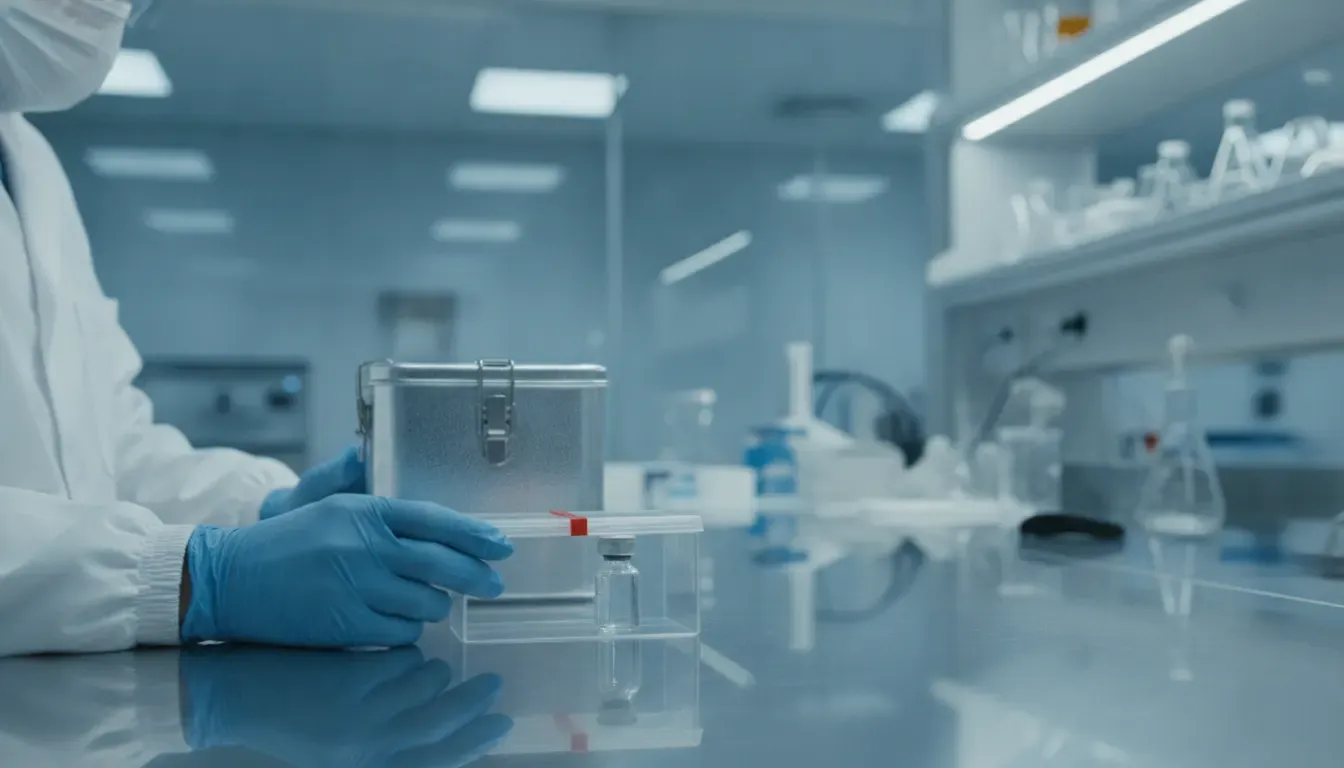
A research compound chain of custody is the documented, continuous record that connects a defined lot to each authorized receipt, storage, transfer, and final disposition event. For laboratory procurement teams, that record turns a shipment into traceable material with an evidence trail that can be reviewed during an internal quality check, study handoff, or supplier discussion.
Contact the research supply team about lot documentation and compound traceability.
This guide is for principal investigators, laboratory managers, procurement teams, CROs, and quality personnel who need a practical documentation framework. It addresses research, laboratory, and analytical use only. It does not provide instructions for human use, dosing, administration, diagnosis, treatment, or disease prevention.
What Does a Research Compound Chain of Custody Prove?
A chain of custody does not prove that a compound will produce a particular experimental result. It proves something narrower and highly useful: the laboratory can account for the material's identity, possession, condition, and documented movement across defined checkpoints. The record should allow a qualified reviewer to answer what arrived, which lot it belonged to, who accepted it, where it was kept, who moved it, and what happened when it was transferred, sampled, returned, or disposed of.
That purpose is consistent with the general chain-of-custody principle described by the National Library of Medicine's overview of chain of custody: a continuous record makes possession and handling events attributable. The CASRAI research-lab example likewise treats the record as a linked account of handlers, actions, timing, and condition. Research laboratories adapt those principles to their own material controls, study protocols, and quality systems, while a laboratory chain-of-custody program overview can help teams think through roles and implementation.
Traceability is different from a product description
A catalog page may identify a compound by name, format, or stated specification. A custody record connects a specific physical unit or lot to an order, shipment, receipt event, storage location, and later movement. The distinction matters when a laboratory has more than one lot of the same compound, when work is shared across rooms, or when a study is repeated months after the original purchase.
Custody is different from analytical quality
A lot-specific certificate of analysis and analytical report can document reported identity or purity testing. They do not, by themselves, show every custody event after release. Conversely, an unbroken custody log does not replace the laboratory's analytical review. The strongest file keeps the two evidence streams connected but separate: test records describe what was reported about the lot, while custody records describe what happened to the received material.
The record supports review, not a human-use claim
Chain-of-custody documentation is a process control for research material. It should describe laboratory events, authorized personnel, equipment or storage locations, and study records. It should not be written as a consumer-use instruction or as evidence of a medical outcome. Keep the purpose statement anchored to the laboratory or analytical project that authorized the material.
Which Records Belong in the Custody File?
A useful custody file is more than a single signed form. It is a linked set of records with a consistent lot identifier. The exact fields should follow the laboratory's quality system and study requirements, but the record set below gives procurement and receiving teams a practical starting point.
Purchase and request record
Start with the approved internal request or purchase record. Capture the requesting group, project or study reference, compound name, specified form, requested quantity, supplier, order reference, and any required documentation. If the request contains a project-specific material specification, retain it with the custody file rather than relying on a later email summary.
Lot identity and source record
Assign or preserve a unique internal material ID that maps to the supplier's lot or batch number. Record the product name exactly as shown on the supplier document, along with the order number, date received, container count, and any internal aliquot identifiers created later. Avoid replacing the supplier lot number with a shorthand that could be confused with another material.
Certificate and analytical record
Attach the lot-specific COA and any available analytical report to the same record set. Note the document version or date, reported testing source, analytical methods listed, and the relationship between the document and the lot received. Trusted Peptides emphasizes third-party HPLC testing and transparent COA documentation as research-supply trust signals; procurement teams should still review each document against their own acceptance criteria.
For background on evaluating research material documentation, see the guide to peptide purity and verification and the HPLC and LC-MS comparison for research review.
Shipment and packaging record
Record the shipment reference, carrier information, package count, receipt date, and the condition of the outer packaging. Note visible damage, broken seals, missing containers, or other discrepancies. A photograph may be useful under the laboratory's policy, but it should be stored with the approved record system and linked to the material ID rather than left in an individual inbox.
Receiving acceptance record
The receiving entry should show who accepted the shipment, what was checked, whether the lot and container labels matched the order, and whether the material was accepted, quarantined, or referred for review. The receiver does not need to make a scientific judgment outside their role. They need to document the defined checks and escalate discrepancies to the responsible reviewer.
Storage and location record
Log the initial storage location and any subsequent location change required by the laboratory's procedure. Use a location identifier that another trained team member can interpret. If the storage system records access or temperature data, link the applicable record rather than copying unverified readings into the custody form. The research handling and stability guide can provide additional context for documenting material protection without turning the article into a consumer handling guide.

A clear handoff record connects the lot identifier to the next authorized storage or study checkpoint.
How Should Laboratories Document Receipt and Storage Checkpoints?
Receipt and storage are where a procurement record becomes a controlled laboratory record. The process should be easy enough to perform consistently and specific enough to reveal a mismatch. A short checklist is generally more reliable than an open text field that asks staff to describe everything from memory.
Define the receipt checkpoint before delivery
Agree in advance which fields the receiving team must verify. A basic checkpoint can include purchase reference, supplier, lot or batch number, container count, label match, seal or packaging condition, accompanying documentation, date and time, receiver identity, and disposition. If the project requires additional checks, add them to the approved procedure before the shipment arrives.
Compare three identifiers, not one
At receipt, compare the order or request record, the physical label, and the lot-specific documentation. A matching product name alone is insufficient when multiple lots or formats are in circulation. If a lot number is absent, truncated, or inconsistent, record the exception and place the material into the laboratory's defined review status rather than silently correcting it.
Use a defined quarantine path
Not every discrepancy means the material must be discarded, and not every discrepancy can be resolved by the receiver. A quarantine status prevents unreviewed material from being treated as accepted while the responsible person evaluates the issue. Record the reason, date, person responsible, supporting evidence requested, and final disposition. Keep the original entry visible so the decision history is not lost.
Record storage location changes
When material moves from receiving to a controlled storage location, log the source location, destination location, date and time, person completing the move, and material ID. If an aliquot or sub-container is created, give it a new identifier that remains linked to the parent lot. This prevents an internal label from becoming an orphaned reference with no clear source.
Link environmental records without inventing data
Storage requirements are project and material dependent. Follow the approved laboratory procedure and the applicable supplier documentation. When an environmental monitoring system exists, reference its record ID or time window. Do not backfill a temperature or condition that was not measured. An honest exception with a review decision is more useful than a polished but unsupported entry.
What Should a Transfer Entry Include?
A transfer entry accounts for movement between authorized people, rooms, storage units, study teams, or facilities. The purpose is not to make routine work burdensome. It is to make the material's location and responsibility visible whenever a later reviewer could reasonably ask who had control of it.
Identify the releasing and receiving parties
Use names or staff IDs defined by the laboratory's record policy. The release entry should identify who relinquished control, while the receiving entry should identify who accepted it. A shared inbox or department name may not be enough when the transfer involves a specific study or a controlled storage area.
Capture the reason and destination
State why the material moved and where it went. Examples include transfer to an authorized study room, movement to an analytical area, handoff to a collaborating laboratory, or return to controlled storage. Avoid vague language such as moved for testing when the laboratory can name the destination or study reference.
Document condition and container status
Record the container or aliquot identifier and any required condition check at the time of transfer. Note visible damage, open or closed status, seal condition, or other defined observations. Do not add a conclusion that the record cannot support. The entry should distinguish an observation from a later scientific or quality decision.
Retain the transfer confirmation
For a physical handoff, an electronic acknowledgment, signature, or approved scan can close the transfer event. The method should be defined by the laboratory's record policy and should remain associated with the same material ID. If the transfer is rejected or delayed, record that outcome and the interim location.
How Can Procurement Teams Make the Record Audit-Ready?
Audit readiness is mostly a retrieval problem. A reviewer should not need to reconstruct the custody history from separate mailboxes, informal notes, and supplier portals. The file should present a chronological chain with clear links to source records and visible explanations for exceptions.
Use one stable lot identifier throughout
Put the same internal material ID and supplier lot number on the request, receiving entry, storage record, transfer log, and disposition record. If the laboratory uses a laboratory information management system, make the identifier searchable. If it uses controlled files, use a consistent naming convention and cross-reference index.
Keep the chronology continuous
Arrange events by date and time, with no unexplained gap between receipt, storage, transfer, study use, return, or disposition. A gap is not automatically proof of a problem, but it is a prompt for review. Record the explanation, supporting evidence, and decision rather than deleting or rewriting the original event.
Separate original records from annotations
Corrections should preserve the original entry, identify the person and date of the correction, and state why it was made. Avoid overwriting a lot number or erasing an earlier status. Version history and controlled access help reviewers distinguish an original observation from a later clarification.
Define retention and access
Retention periods depend on the institution, project, funding requirements, and applicable procedures. The laboratory should define how long the custody file, COA, shipment record, transfer entries, and disposition evidence must remain available. Access should be limited to authorized personnel while still allowing qualified reviewers to retrieve the record when needed.
For a broader procurement view, the research peptides overview explains why material specifications and documentation matter before an experiment begins. The separate custody file then preserves the lot-specific movement history after the purchasing decision.
Use exceptions as quality signals
Repeated missing fields, label mismatches, delayed COAs, or unexplained transfers can reveal a process weakness. Trend the exception categories without making unsupported claims about the material itself. The goal is to improve the receiving and documentation system, clarify supplier questions, and reduce preventable ambiguity in future study records.
Checkpoint review matrix
- Request and order: Material specification, supplier, project reference, and order ID. Review question: Was the requested material clearly defined and authorized?
- Receipt: Lot, container count, packaging condition, receiver, and date. Review question: Does the physical shipment match the order and lot documents?
- Storage: Location, material ID, move date, and linked monitoring record. Review question: Can the current location and custody status be identified?
- Transfer: Releasing party, receiving party, destination, condition, and acknowledgment. Review question: Is responsibility clear before and after the handoff?
- Disposition: Final status, date, authorized person, and supporting record. Review question: Can the file explain what happened to the material after study work?
Review lot-specific COA and testing documentation when building your laboratory's receiving checklist.
What Are Common Chain-of-Custody Gaps?
Most gaps are ordinary workflow failures rather than dramatic events. They occur when a team assumes a label is enough, treats an email as a permanent record, or creates a new internal identifier without linking it to the supplier lot.
General documents are used for a specific lot
A generic product statement or undated test summary may be useful background, but it does not necessarily identify the lot received. Mark general documents as background and request the lot-specific record required by the laboratory's acceptance criteria.
Receiving and storage records are disconnected
If the receipt log uses a purchase number while the storage system uses an unrelated shelf label, a reviewer may be unable to connect the records. Use the material ID as the bridge and test retrieval with a sample record before the process is needed for an audit.
Transfers are recorded after the fact
Late entries create uncertainty about the actual sequence of events. Where possible, document the transfer at the checkpoint. If a late entry is unavoidable, identify it as a late entry and include the reason, date, and responsible reviewer.
Exceptions disappear when the record is corrected
Replacing a mismatch with the expected value hides the control failure. Preserve the original observation, record the investigation, and show the final decision. That history helps the laboratory improve its process and gives procurement a clear question for the supplier when a future shipment differs.
FAQ: Research Compound Chain of Custody
What is a research compound chain of custody?
It is a continuous, documented record linking a defined research compound lot to authorized receipt, storage, transfer, review, and final disposition events. It supports traceability and accountability for laboratory material. It does not replace analytical testing or establish a human-use or therapeutic outcome.
What is the difference between a COA and a custody record?
A COA reports information about a specified lot and the testing represented by that document. A custody record accounts for possession, location, condition observations, and movement after release or receipt. Laboratories should retain both when their procedures require lot-level traceability.
Who should maintain the custody record?
The laboratory should assign ownership within its quality or study workflow. Procurement may initiate the supplier and order record, receiving staff may complete the receipt checkpoint, and authorized laboratory or quality personnel may manage storage, transfer, review, and disposition entries. Responsibilities should be defined before material arrives.
What should happen when a lot number does not match?
Record the discrepancy and place the material into the laboratory's defined review or quarantine status. The responsible reviewer should compare the order, physical label, supplier documentation, and shipment records before deciding whether the material can be accepted, corrected in the record, returned, or otherwise dispositioned. Do not silently replace the observed lot number.
Build a Traceable Research Supply Workflow
A research compound chain of custody is most effective when it begins with a clear material specification and continues through every defined checkpoint. Lot identity, COAs, receipt checks, storage location, transfer acknowledgments, and disposition records should work together as one retrievable file. Trusted Peptides supports research-focused procurement with transparent documentation, third-party HPLC testing, and lot-level quality information for qualified laboratory teams.
Contact Trusted Peptides to discuss research supply documentation for your laboratory workflow.
All information in this article is provided for research, laboratory, or analytical purposes only. Products are not for human consumption and are not intended to diagnose, treat, cure, or prevent disease.